 Jim Owen
The best-supported way to cut down on free radical damage is to eat more fruits and vegetables, not to take antioxidant pills. The National Cancer Institute (NCI) says nine randomized trials did not show that antioxidant supplements prevent cancer, and in smokers, beta-carotene pills raised lung cancer risk.
Updated October 26, 2026.
What Free Radicals Are and Why They Matter
I always read the study, not just the headline. Antioxidants show the gap between the two better than almost anything. The headline says free radicals are bad, so get rid of them. The studies say it is more complicated, and the supplement aisle is where most of the trouble starts. Anyone who has walked down that aisle knows how many bottles promise to fix everything.
The NCI describes free radicals as highly reactive chemicals that can harm cells. They form when atoms or molecules gain or lose an electron, and they also have normal jobs in the body. At high levels they can damage DNA, proteins and cell membranes, and damaged DNA may play a part in cancer.
Antioxidants are the things that neutralize free radicals. The body makes some itself and gets the rest mainly from food. The NCI lists beta-carotene, lycopene and vitamins A, C and E as examples.
Reducing Free Radicals Through Food
The National Center for Complementary and Integrative Health (NCCIH) reports a lot of evidence that people who eat more vegetables and fruits have lower risk of chronic disease. A 2017 review looked at 95 studies where researchers watched what people ate. Together they covered more than 2 million people. Eating more fruits and vegetables went with a lower risk of heart and blood vessel disease and cancer. The NCCIH adds that other parts of the diet or lifestyle may explain some of that link.
Most of us have heard “eat your vegetables” since we were kids. If you have ever tossed a bag of spinach that wilted in the back of the fridge, you know good intentions do not always make it to the plate. If you want ideas, think color: berries, oranges, bell peppers, spinach, carrots, sweet potatoes, beans and nuts all make easy adds, and so do these healthy snack ideas.
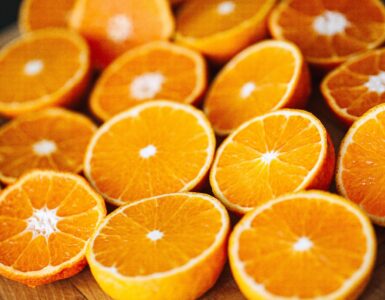
Vitamin C is the easiest antioxidant to find at the grocery store. The NIH Office of Dietary Supplements lists 70 milligrams in one medium orange, 64 in one kiwifruit, 49 in half a cup of sliced strawberries and 39 in half a grapefruit. The daily recommendation for adults is 90 milligrams for men and 75 for women.
MyPlate recommends 1.5 to 2 cups of fruit a day for most adults, depending on age and sex. It also says a diet rich in fruits and vegetables may reduce the risk of heart disease, including heart attack and stroke.
Why Antioxidant Supplements Are a Poor Shortcut
Getting enough fruits and vegetables every day is hard, so many people take antioxidant pills to cover the gap. Most of us have picked up a bottle at the store because the label sounded good. But pills do not behave like food. In the Finnish ATBC trial, beta-carotene was linked to more lung cancer in male smokers. The CARET trial tested beta-carotene plus retinol (a form of vitamin A). It raised lung cancer risk and deaths from all causes, and the trial ended early.
In the SELECT trial of men aged 50 and older, selenium, vitamin E or both did not lower the risk of prostate or other cancers. A later check found more prostate cancer cases among men taking vitamin E alone.
The NCCIH says beta-carotene pills raised lung cancer risk, most clearly in smokers and people exposed to asbestos at work. The U.S. Preventive Services Task Force recommends against beta-carotene or vitamin E pills to prevent cancer. It points to five studies put together, with 76,777 people, that showed no benefit from vitamin E.
The NCI suggests the gap may exist because whole foods hold a complex mix of nutrients, and a single purified antioxidant does not. If you are in cancer treatment, the NCI advises telling your doctors about any supplement you take. It is also smart to ask your doctor or pharmacist before you start any pill or powder.
Free Radical Questions
What are free radicals?
The National Cancer Institute calls free radicals highly reactive chemicals that can harm cells. They form when atoms or molecules gain or lose an electron. They also play normal roles in the body, but at high concentrations they can damage DNA, proteins and cell membranes.
Do antioxidant supplements work?
Not for preventing cancer. The NCI concluded that nine randomized trials did not provide evidence that dietary antioxidant supplements are beneficial in primary cancer prevention. Beta-carotene pills raised lung cancer risk in smokers, and vitamin E alone was linked to more prostate cancer in the SELECT follow-up.
Which foods are good sources of vitamin C?
The NIH Office of Dietary Supplements lists one medium orange at 70 milligrams, one kiwifruit at 64, half a cup of sliced strawberries at 49, and half a grapefruit at 39. Adult men need 90 milligrams a day and adult women need 75.
Do smokers need more vitamin C?
Yes. The NIH Office of Dietary Supplements says smokers need 35 milligrams a day more vitamin C than nonsmokers. That target is best met with fruit and vegetables, since beta-carotene supplements were linked to higher lung cancer risk in smokers in the ATBC and CARET trials.
This article is for general information only and is not medical advice. Talk to a licensed clinician about your own situation.
 Madeline Marshall