
 Richard Hollis
Mindful eating means paying close attention to your food and your body while you eat, without judging either one. The first thing to do is simple: put the phone and the screen away for one meal a day, and take your first five bites slowly.
Updated November 9, 2026.
What is mindful eating?
Mindful eating grew out of the wider practice of mindfulness. You notice what you eat, how your body feels, and what thoughts come up about food, and you try not to grade any of it. The Harvard T.H. Chan School of Public Health describes it as using your senses to enjoy the meal, and it points out that there is no standard definition of what counts. Plenty of products use the name loosely.
I’ve stood in a lot of church supper lines over the years, and I know how a plate fills up there. It fills fast, and mostly before anyone has decided what they actually want. Mindful eating is the opposite habit: you choose, you taste, and you stop on purpose. It is not a diet, and it does not tell you what to eat.
Here’s what I’d do first. Pick one meal and eat it with nothing else going on. That one change is the heart of the whole practice, and everything below just helps you do it well.
How to practice mindful eating
Five steps follow, in the order I would try them. Add the next one only when the one before feels normal. Trying all five at once usually ends with a tired person.

Step 1: Put the screens away (do this first)
You can’t taste what you aren’t paying attention to. Harvard’s Nutrition Source says distracted eating is associated with overeating, and that matches ordinary life, where a bag of chips is often empty by the second episode.
Pick one meal. Move the phone to another room, switch off the TV and close the laptop. Sit at a table, even a small one. The quiet may feel odd for the first few days, and it often passes.
Best for: people who eat most meals at a desk, in the car or in front of a screen.
Skip it if: the meal is a family table where talking is the point. We raised three kids in Phoenix, and on nights when it was too hot to go out, the game board came out and everyone ate around it. I wouldn’t trade a single one of those meals for a silent plate.
Step 2: Pause before the first bite
A pause gives you a chance to check how hungry you really are, which does more to set how much you eat than any plate size. Harvard Health Publishing suggests taking a minute or two to appreciate the food before you start.
Look at the plate. Notice the smell. Ask yourself how hungry you are on a scale of one to ten (the scale is below). Then pick up the fork.
Best for: people who eat standing at the counter or grab food between tasks.
Skip it if: you are ravenous. Eat a few bites first. Extreme hunger makes it hard to pay attention to anything but the next forkful.
Step 3: Set the fork down between bites
This is the easiest way I know to slow down without counting anything or buying anything. Your hands do the work, and your mouth follows.
Take a bite, put the fork or spoon on the plate, chew, swallow, then pick it up again.
Best for: fast eaters, and anyone who finishes before the others have started.
Skip it if: a hot meal going cold would ruin it for you. Take smaller bites instead.
Step 4: Chew longer and notice the flavor
Flavor builds as you chew, and a bite that is swallowed in three seconds hardly gets a chance to taste like anything. The same Harvard Health piece says some foods may need 20 to 40 chews, depending on the food.
Try it on the first bite or two of each course. Notice the texture, the salt, the sweetness and how the taste changes. Then stop counting and just keep chewing a little longer than usual.
This is where I’d call something overhyped. Counting every chew for a whole meal turns dinner into a chore, and so does the famous ten-minute raisin. Both are fine as a one-time lesson. Neither is a habit I’d keep.
Best for: people who feel their food disappears before they enjoy it.
Skip it if: counting makes you tense. The goal is attention, not a score.
Step 5: Check in halfway through
Halfway is the moment you can still change your mind. Eating slowly makes it easier to notice when you are satisfied, and the Nutrition Source puts that point at about 80 percent full.
Put your utensils down and rate your hunger again. If you are comfortable, you can stop, or you can keep going and enjoy it.
Best for: people who finish the plate out of habit, or because it was served.
Skip it if: your doctor has given you a set meal plan for a health condition. Ask how this fits with it first.
Mindful eating exercises: the hunger scale
If you only use one tool from this piece, make it this scale.
The hunger and fullness scale
This is a simple rule of thumb, not a medical standard. Rate yourself before you eat, halfway through, and when you finish.
- 1 to 2: Very hungry. Shaky, cranky, or can’t think straight.
- 3 to 4: Hungry. Ready to eat, and you can still make a calm choice.
- 5: Neutral. Not hungry, not full.
- 6 to 7: Satisfied. Comfortable, and the food still tastes good.
- 8: Full. You could have stopped a few bites ago.
- 9 to 10: Stuffed or uncomfortable.
I’d try to start eating around a 3 or 4 and stop somewhere in the 6 to 7 range. You will miss it plenty of times, and that is normal.
Best for: people who want one number to check instead of a list of rules.
Skip it if: rating your body starts to feel stressful or obsessive. Drop the number and just notice how you feel.
Benefits of mindful eating: what the research says
The honest answer is that the evidence is modest. The Harvard Nutrition Source says mindfulness approaches can be an effective tool for behaviors such as emotional and binge eating. It also says weight loss is not always seen, and that a review of 68 studies found slower eating and better recognition of fullness, but no consistent drop in body weight.
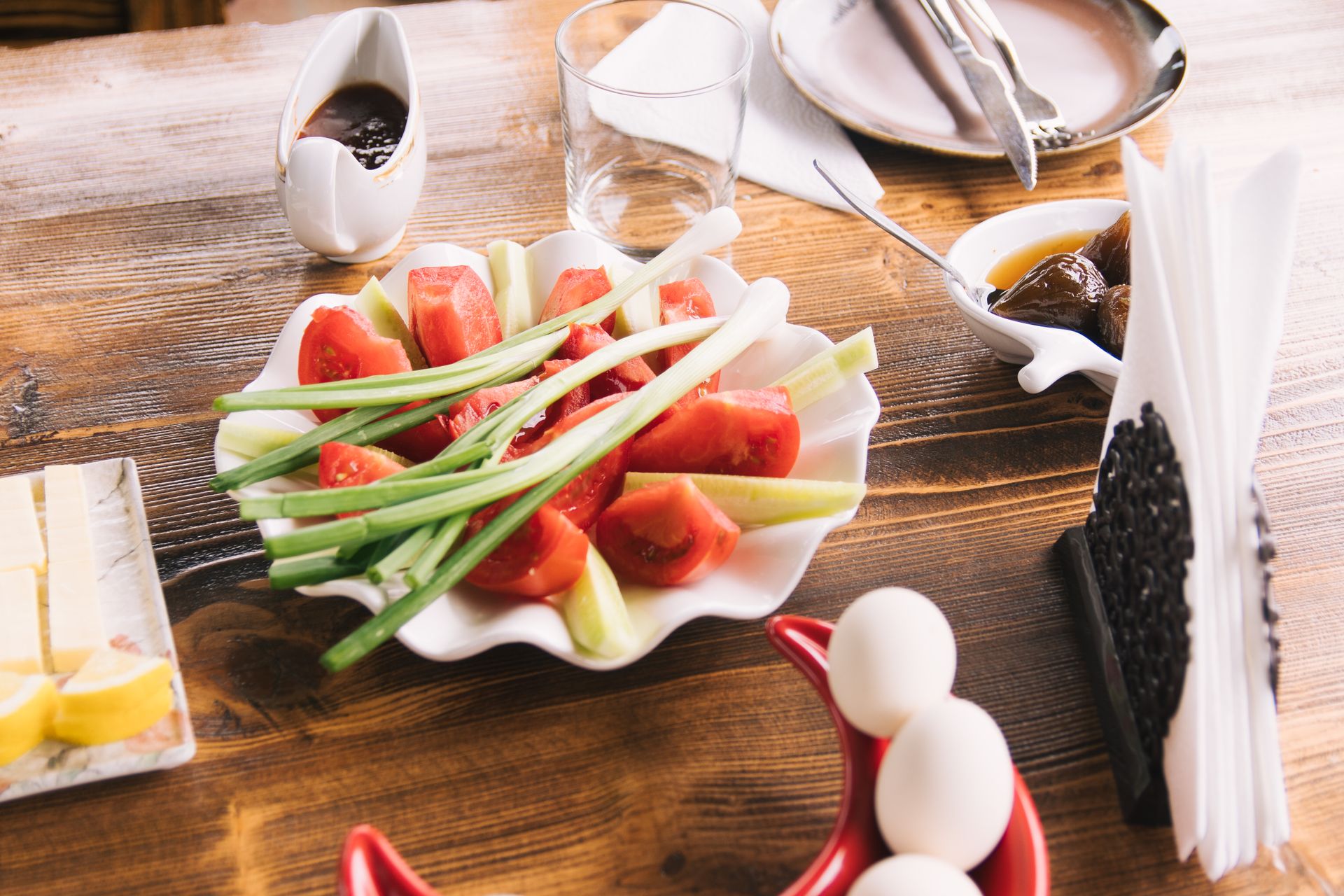
Other benefits are smaller and more personal. Cleveland Clinic says you may enjoy food more in smaller amounts, and that slower eating and thorough chewing may help digestion.
I have read the study behind plenty of headlines, and the headlines here promise more than the studies do. I’d try this because it makes meals better, not to change a number on a scale.
Mindful eating tips that hold up
Don’t skip meals to save your appetite. Harvard says eating at roughly the same times each day helps you avoid extreme hunger, and extreme hunger is when mindful eating is hardest. A small plate, about nine inches, also helps, since you can always go back for more.
Make the food worth looking at. Plating a meal on purpose gives you a reason to slow down before the first bite, and these food presentation tips for the home show how little it takes. It also helps to start the day calm, and the 5-minute morning meditation is an easy way to do that before breakfast.
Holiday meals deserve their own plan. If the table makes you tense, these ideas on mindfulness for holiday stress pair well with the scale above. Cleveland Clinic’s article says not to put pressure on yourself to be perfect every day, and that is the best advice in the pile.
One more thing to watch for. If eating feels out of control, or it is tied up with worry, shame or other hard feelings, please talk to a doctor or a counselor. Mindful eating is not meant to replace care for that. If anxiety is part of it, these tips for reducing anxiety may help alongside that conversation.
Frequently asked questions about mindful eating
Does mindful eating help you lose weight?
It may not. The research is mixed, and a large review of 68 studies found no consistent change in body weight. If weight is your goal, I’d talk to your doctor about a plan, and treat mindful eating as a way to enjoy food and notice fullness. If weight loss happens too, fine. I wouldn’t count on it.
How long should a meal take?
There is no official number. I’d start by making a normal dinner a few minutes longer than usual, and see how it feels. Setting the fork down between bites will get you most of the way without watching a clock.
Can mindful eating help with emotional eating?
It can be a useful tool. The Nutrition Source suggests asking yourself whether you are truly hungry, or just bored or stressed. That question alone is worth a try. But if emotional eating is frequent or feels out of your hands, a doctor or counselor is the right next call.
Can kids practice mindful eating?
They can try, though the research on children is limited. I’d skip the lectures. Eat together at a table, turn off the screens, talk about how the food tastes, and let the kids stop when they say they’re done. A relaxed table teaches more than any exercise.
This is general information, not medical advice. Talk to your doctor about your own eating and health.

 Avery Walsh

 Madeline Marshall