
 Del Bailey
To set a holiday budget, start with one total you can pay without borrowing. Take what is left after regular bills and savings. Then split it across gifts, travel, food, décor, shipping, tips and charity. Write the total down before November 1, track every purchase against it, and review it in January.
Published October 25, 2026.
I keep a household budget. I give November and December their own line instead of letting them leak into groceries and the credit card. I cook most nights, so food is the category I can estimate best. Gifts and travel are the two that run away. If money stress is already part of your season, the guide on how budgeting reduces stress covers the basics. This guide is the holiday version, one decision at a time.
How do you set a holiday budget total?
Work backward from what you can pay in cash. Do not work forward from what you want to buy. The CFPB’s five-step spending plan to avoid holiday debt says to cover regular expenses first. Then estimate extra costs such as hosting or travel, and set what remains for gifts. That order matters. A total built from a wish list nearly always comes out too high.

Here is the formula. Take monthly take-home pay, subtract regular bills, and subtract your savings goals. What is left is the free amount. Multiply the part of it you can set aside by the number of months or paydays you have left. The CFPB’s budgeting page, “Budgeting: How to create a budget and stick with it,” starts the same way. It tells you to track income, track spending and map bills against due dates, so you can see which weeks run short.
It is late October, so you may not have twelve months. Count the paydays between now and December 31 instead. If five remain and you can set aside $120 from each, the total is 5 × $120 = $600. That is an example, not a target.
Do not let the national headline set your number. The National Retail Federation, a retail trade group, forecast on October 15, 2026 that holiday sales would reach $1.013 trillion for November 1 through December 31. That would be 4.2% above 2025, when sales rose 3.1% to $972 billion. Those are totals for the whole country. NRF’s release gives no per-household figure, so it cannot tell you what to spend.
If the free amount is too small, trim before you shrink the gift list. See 5 ways to get extra money from your budget and tips for reducing your monthly bills for the usual places to find it.
Which holiday budget categories should you plan for?
Plan for seven. Gifts get the attention, and the other six are where a holiday budget slips by mid-December. The CFPB’s budgeting page suggests sorting everyday spending into categories, from utilities and housing to eating out and entertainment. Give the holidays the same treatment with a line of their own, split using the checklist below.
| Category | What it covers | Question to settle first |
|---|---|---|
| Gifts | Presents for family, friends, teachers and coworkers, plus gift cards | Who is on the list, and what is the cap for each tier? |
| Travel | Gas, flights, lodging, a rental car, pet boarding | Are you traveling, hosting or both? |
| Food | Holiday meals, party dishes, drinks, baking supplies | Which meals will you cook, and which will you buy? |
| Décor | Tree, lights, wreaths, wrapping paper | What can you reuse from last year? |
| Shipping | Postage, cards and stamps, delivery fees for gifts you send | How many boxes leave the house? |
| Tips | Seasonal thank-yous for people who serve you all year | Who gets one, and at what amount? |
| Charity | Donations, drives, community meals | Is this a planned gift or an impulse at checkout? |

Two of these deserve extra attention. The CFPB’s plan names hosting and travel as the extras to estimate. Both are easy to forget. Food is the line I can predict, since a holiday dinner is my normal grocery run scaled up. Shipping is the sleeper. Postage and delivery fees never show up on the gift list.
What does a worked example look like?
Here is one, built from a stated total. These are my own illustrative numbers. They are an example, not a benchmark or an average. Each total is a monthly set-aside multiplied by 12 months: $50 × 12 = $600, $100 × 12 = $1,200 and $200 × 12 = $2,400. Every total is then split with the same percentages: gifts 45%, travel 20%, food 20%, décor 5%, shipping 4%, tips 3% and charity 3%. Those add up to 100%.
| Category | Share | 1 person: $600 | 2 people: $1,200 | 4 people: $2,400 |
|---|---|---|---|---|
| Gifts | 45% | $270 (0.45 × 600) | $540 (0.45 × 1,200) | $1,080 (0.45 × 2,400) |
| Travel | 20% | $120 | $240 | $480 |
| Food | 20% | $120 | $240 | $480 |
| Décor | 5% | $30 | $60 | $120 |
| Shipping | 4% | $24 | $48 | $96 |
| Tips | 3% | $18 | $36 | $72 |
| Charity | 3% | $18 | $36 | $72 |
| Total | 100% | $600 ($270 + $120 + $120 + $30 + $24 + $18 + $18) | $1,200 ($540 + $240 + $240 + $60 + $48 + $36 + $36) | $2,400 ($1,080 + $480 + $480 + $120 + $96 + $72 + $72) |
Change the shares to match your life. A household that hosts raises food and lowers travel. A household that flies raises travel and lowers everything else. The method stays the same: pick the total first, then divide it, and never the other way around.
How do you split a holiday budget per person?
Use tiers instead of guessing at each name. Using the four-person household above, the gift pot is $1,080. Put everyone on the list into three tiers, give each tier a cap, and hold back a small reserve for the person you forgot. The CFPB’s plan also says to make a list and check it twice. It suggests a personal rule: if something is not on your list, do not buy it, even when sales pop up.
| Tier | People | Cap each | Subtotal |
|---|---|---|---|
| Your household | 3 | $180 | 3 × $180 = $540 |
| Extended family | 4 | $80 | 4 × $80 = $320 |
| Friends, teachers, coworkers | 6 | $30 | 6 × $30 = $180 |
| Reserve for the forgotten name | – | – | $40 (under 4% of the pot) |
| Gift pot | 13 | – | $540 + $320 + $180 + $40 = $1,080 |
Gift cards count against the cap like any other present. The CFPB’s plan adds that a meaningful gift can cost a fraction of a store-bought one. Its examples include homemade hot chocolate, bean soup or cookie mixes in a mason jar.
Which payment method keeps a holiday budget safe?
Whichever one you can pay off before interest starts. The CFPB’s holiday plan says bringing only the cash you plan to spend keeps you inside the budget. It also says a credit card can give you more consumer rights, such as when an item is broken when you open the box. The catch, per the CFPB, is a specific plan to pay the card bill, with the money already set aside in your budget. My own rule is to pay the statement in full.

Interest is the cost of getting that wrong. The Federal Reserve’s G.19 consumer credit release of October 7, 2026 gives a rate for August 2026 (preliminary). It is 22.36% on commercial bank credit card accounts that were assessed interest. Across all accounts it lists 21.19%. Your own card rate will differ. As a rough check, a $1,500 balance at 22.36% costs about $1,500 × 0.2236 ÷ 12 = $27.95 in interest the first month, before any compounding.
| Method | What the source says | Budget rule |
|---|---|---|
| Cash in envelopes | CFPB: bringing only the cash you plan to spend keeps you within budget | One envelope per category |
| Credit card | CFPB: more consumer rights, with a specific plan to pay the bill | Pay the statement balance in full |
| Buy now, pay later | CFPB: most charge late fees; returns may not end the payments; fewer dispute protections than cards | Count each installment against its category |
On buy now, pay later, the CFPB’s explainer (reviewed May 21, 2024) describes an installment loan. One common plan splits the cost into four interest-free biweekly payments. It adds that your creditworthiness may be evaluated each time you start a purchase with one.
How do you track a holiday budget through December?
Pick a method you will actually keep up. The CFPB’s budgeting page says to make tracking easy for yourself, whether that is a daily journal or a folder of receipts you review at the end of each week. It also says that if tracking feels overwhelming, start small and look at your expenses one week at a time. That is the right scale for December.

Keep one line per purchase with five columns: date, category, planned, spent and remaining. Take the gift pot from the table above. After a $210 purchase and a $95 purchase, remaining is $1,080 − $210 − $95 = $775. Check the totals on the same day every week. The CFPB’s plan says comparing what you spent with what you expected helps you avoid surprises.
Add one rule of your own. When any category reaches 75% of its plan, stop and decide before the next purchase. For the $1,080 gift pot, that trigger is 0.75 × $1,080 = $810. Nothing moves between categories unless you write down where it came from.
What is the January test for a holiday budget?
It is a short review when the January statement arrives. The plan worked if the card balance matches what you planned to carry, which should be zero. Then compare each category with its plan. These are my own pass marks, not a standard.
| Question | Pass | Example from the 2-person budget |
|---|---|---|
| Is the card balance zero, or what you planned to carry? | Yes | Statement balance $0 |
| Did total spending land within 10% of the plan? | Within $120 | Spent $1,260 against $1,200, which is $60 over (5%): gifts +$45 and food +$15 |
| Did any category run more than 10% over its line? | No | Gifts $585 against $540 is 8.3% over; food $255 against $240 is 6.3% over |
| Are returns refunded? | Yes | Confirm each refund posted |
| What is next year’s monthly set-aside? | Spent ÷ 12 | $1,260 ÷ 12 = $105 a month |
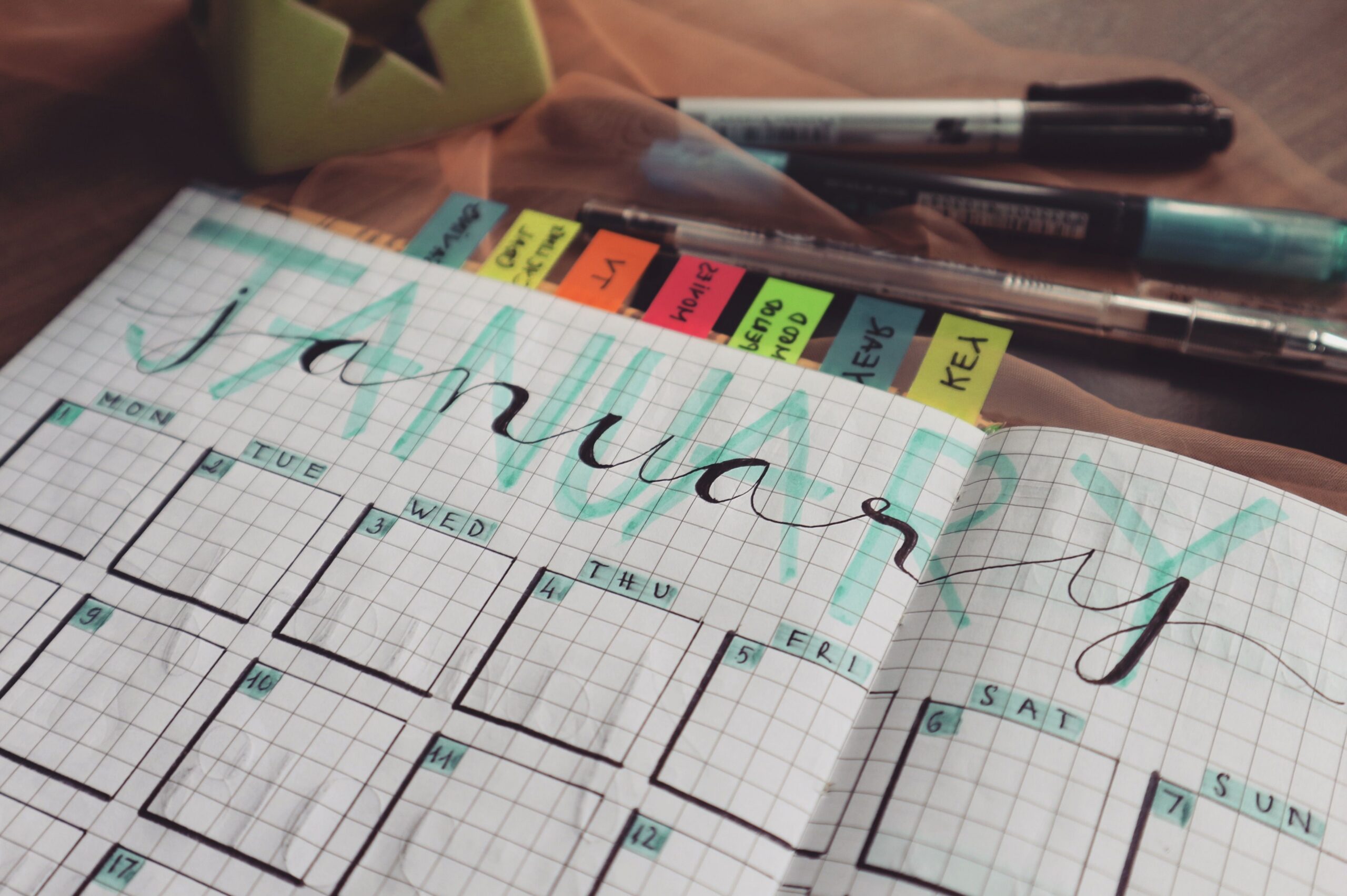
The last row is the point of the exercise. Spending is easy to forget by February, but a monthly number is hard to ignore. Put the January review on your calendar in October, before the first purchase. Then start next year’s set-aside the same month.
What do people ask about setting a holiday budget?
How much should I spend on the holidays?
There is no single right number, so start from your own money instead. The CFPB’s holiday plan says to cover regular expenses first, then estimate extras such as hosting and travel, and set what remains for gifts. The National Retail Federation forecast gives national totals only, with no per-household figure. Your total is what you can pay without borrowing.
Should I put holiday spending on a credit card?
You can, but only with a specific plan to pay the bill. The CFPB says a credit card can give you more consumer rights than cash, such as when an item is broken when you open the box. The Federal Reserve’s G.19 release for August 2026 lists 22.36% as the commercial bank rate on credit card accounts assessed interest. A balance carried into January gets expensive fast.
Is buy now, pay later a good way to pay for gifts?
Only if every payment already fits your budget. The CFPB says most buy now, pay later loans charge late fees, and that you may need to keep paying even after you return an item. It also says these loans do not offer the same dispute protections as credit cards. Treat each installment as spending against its category.
When should I start a holiday budget?
As early as possible, according to the CFPB’s holiday spending plan. If it is already late October, set the total before November 1, which is when the National Retail Federation counts the season as starting. Write one number, split it into categories, and begin logging purchases from the first one.
Where should you start with a holiday budget this week?
I would write one total on paper before November 1. I would make it an amount I can pay without touching savings or carrying a balance. Then I would split it with the seven categories above and put the January review on the calendar. Everything else, from tiers to tracking, only works once that first number exists.
For more on the money side of daily life, browse the Personal Finance category.
This guide is general education, not tax, investment or legal advice. The budget figures above are examples I made up to show the arithmetic.

 Jim Owen