 Del Bailey
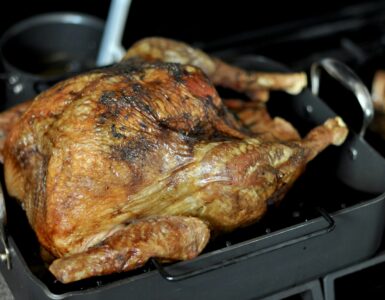
A turkey is done when a food thermometer reads at least 165°F in the innermost part of the thigh, the innermost part of the wing and the thickest part of the breast. That is the safe turkey internal temperature on the federal FoodSafety.gov charts, and USDA names the same three spots.
Published October 21, 2026.
I cook most nights, and the habit I trust most in my own kitchen is checking meat in more than one spot. I never lean on a timer alone. A holiday bird is the biggest poultry most home cooks handle all year, so it is the worst place to guess. Thawing comes first, so start with my guide to how long to thaw a turkey. Then come back here for the cooking.
What turkey internal temperature is safe?
The safe minimum is 165°F (74°C), and it applies to the whole bird, breast included. The FoodSafety.gov safe minimum internal temperatures chart lists that figure for whole poultry, breasts, legs, thighs and wings. It also covers giblets, sausage and stuffing inside poultry. Reheated leftovers go to 165°F on the same chart.
Roasting time is a planning tool, but it does not tell you the bird is safe. The table below pairs the roasting times on the FoodSafety.gov meat and poultry roasting chart with the reading each size has to reach. Every time is for an unstuffed turkey in a 325°F oven.
| Turkey size | Roasting time at 325°F (unstuffed) | Minimum reading in every spot |
|---|---|---|
| Whole breast, 4 to 6 pounds | 1½ to 2¼ hours | 165°F |
| Whole breast, 6 to 8 pounds | 2¼ to 3¼ hours | 165°F |
| Whole turkey, 8 to 12 pounds | 2¾ to 3 hours | 165°F |
| Whole turkey, 12 to 14 pounds | 3 to 3¾ hours | 165°F |
| Whole turkey, 14 to 18 pounds | 3¾ to 4¼ hours | 165°F |
| Whole turkey, 18 to 20 pounds | 4¼ to 4½ hours | 165°F |
| Whole turkey, 20 to 24 pounds | 4½ to 5 hours | 165°F |
Every row, breast rows included, comes from that FoodSafety.gov chart, which sets the oven at 325°F. The University of Illinois Extension roast turkey page prints the same breast figures. Treat the times as a guide, though. Illinois Extension warns that oven accuracy, a very cold bird or a pan that is too small can change the clock.
Where do you check turkey internal temperature?
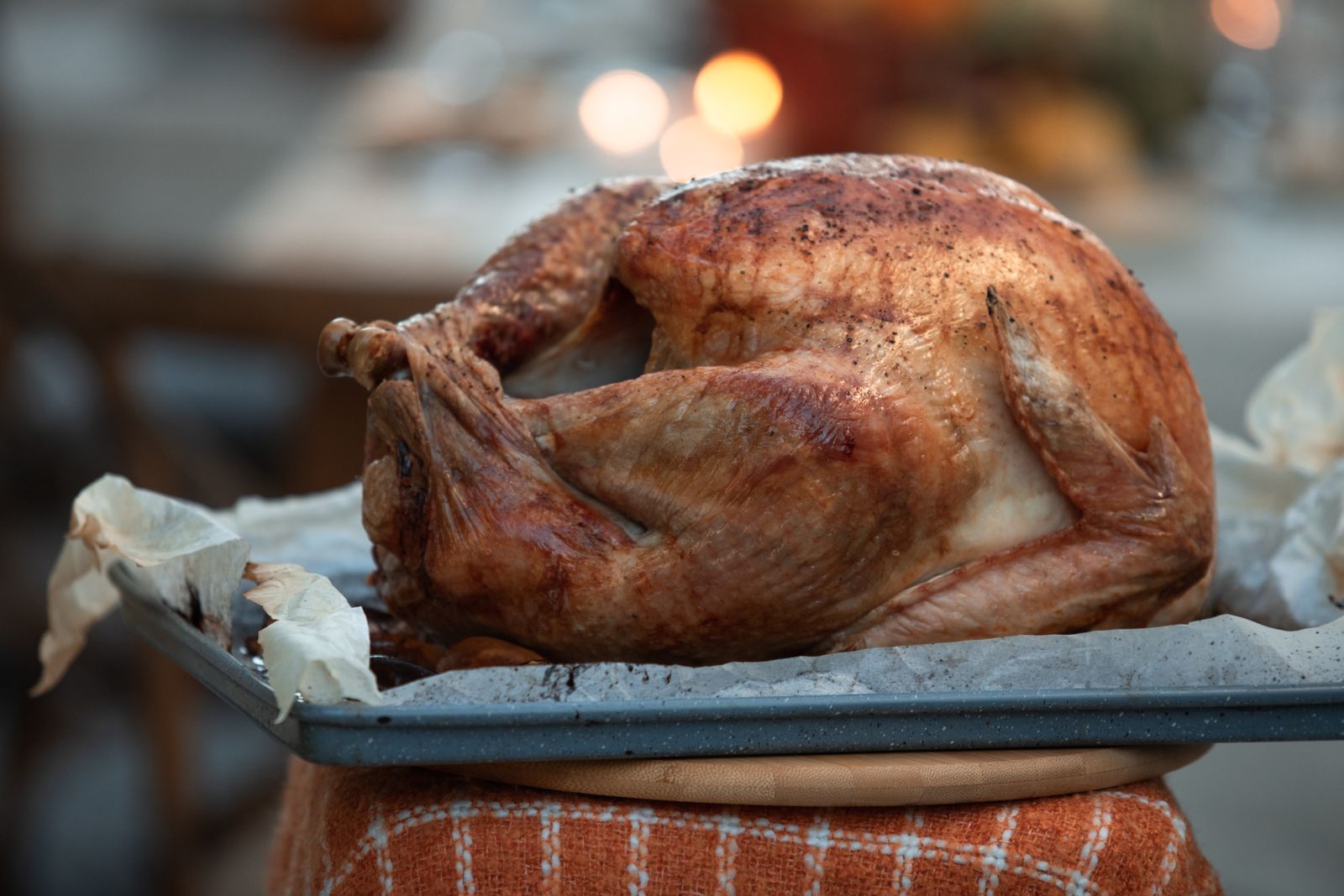
Check three places. The FoodSafety.gov roasting chart and USDA’s Turkey FUNdamentals questions page name the innermost part of the thigh, the innermost part of the wing and the thickest part of the breast. Each one has to read 165°F. A turkey has thick and thin parts, so they do not finish together. That is why the instructions name three spots.
There is also a timing tip. University of Illinois Extension says to put the meat thermometer in the thigh before the turkey goes into the oven. Then check the other spots as the end gets close. FoodSafety.gov is blunt about the tool: always use a food thermometer to confirm a safe minimum internal temperature. Here is the placement checklist in one place.
| Check | Where the tip goes | Reading to reach | Source |
|---|---|---|---|
| Before roasting | Into the thigh, before the pan goes in the oven | Watch the climb | Illinois Extension |
| Thigh | Innermost part | 165°F | FoodSafety.gov, USDA |
| Wing | Innermost part | 165°F | FoodSafety.gov, USDA |
| Breast | Thickest part | 165°F | FoodSafety.gov, USDA |
| Stuffing, if cooked inside | Through the cavity into the thickest part of the stuffing | 165°F or higher | Illinois Extension, FoodSafety.gov |
| Before carving | Let the bird stand | 20 minutes | Oregon State Extension (Illinois: 20 to 30) |
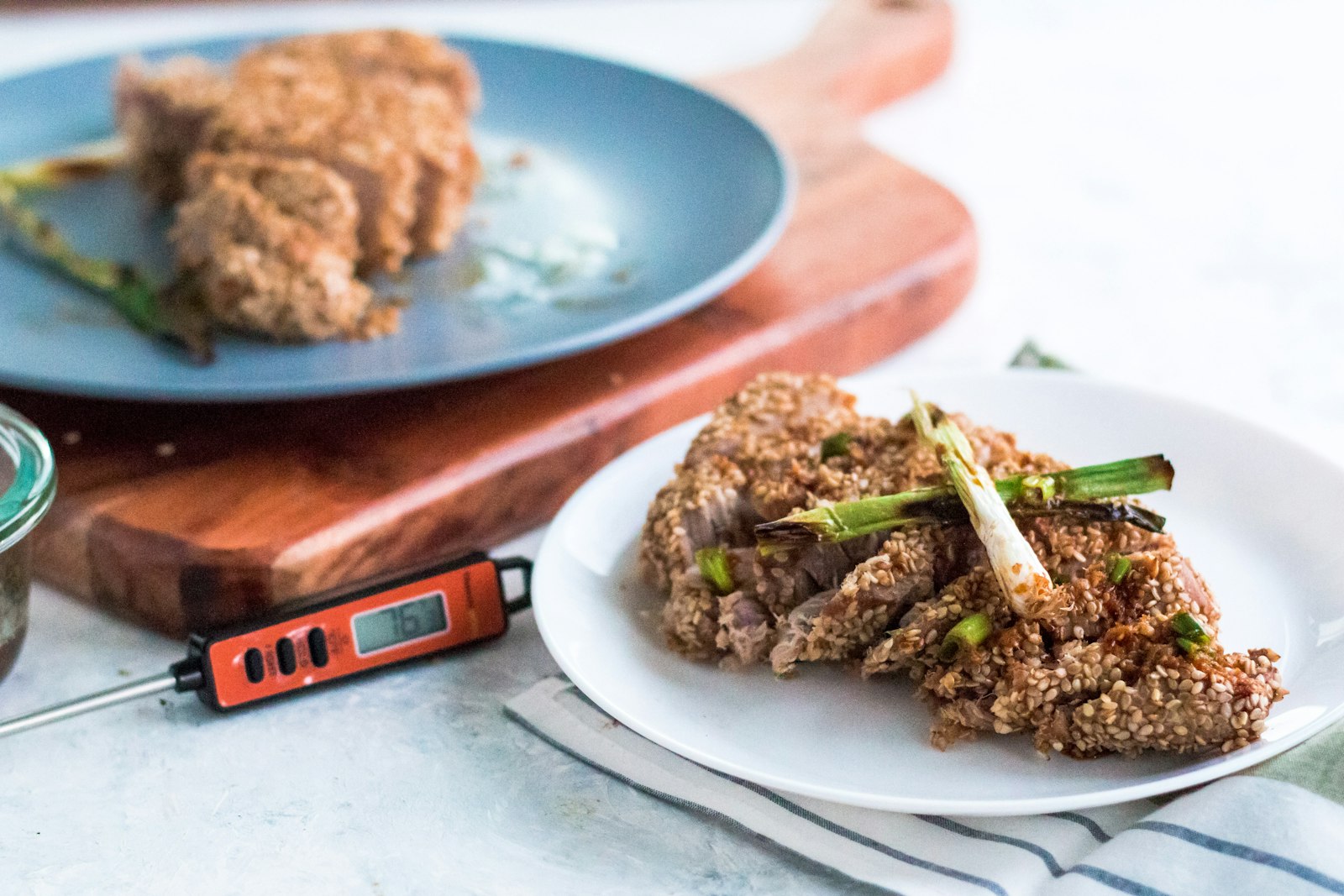
If one spot reads low, keep roasting and check again. Two passing spots are not enough, because all three have to reach 165°F before the turkey comes out.
What time should the turkey go into the oven?
Work backward from the moment you want to carve. This is how I plan it. Oregon State University Extension says to let the turkey sit 20 minutes before carving. So I plan for the bird to come out 20 minutes early, at 3:40 p.m. for a 4:00 p.m. carve. My latest start is 3:40 p.m. minus the long end of the FoodSafety.gov range for the weight.
Oregon State University Extension says to check the temperature periodically during the last 1 to 2 hours of cooking. I take the cautious end, so my first check falls 2 hours before the earliest possible finish. Those two choices, the 20-minute stand and the 2-hour lead, are my planning assumptions. Here is the schedule they produce for a 4:00 p.m. carve.
| Turkey weight | FoodSafety.gov range, unstuffed at 325°F | Put it in the oven by | First thermometer check | Earliest it could reach 165°F |
|---|---|---|---|---|
| 8 to 12 pounds | 2¾ to 3 hours | 12:40 p.m. | 1:25 p.m. | 3:25 p.m. |
| 12 to 14 pounds | 3 to 3¾ hours | 11:55 a.m. | 12:55 p.m. | 2:55 p.m. |
| 14 to 18 pounds | 3¾ to 4¼ hours | 11:25 a.m. | 1:10 p.m. | 3:10 p.m. |
| 18 to 20 pounds | 4¼ to 4½ hours | 11:10 a.m. | 1:25 p.m. | 3:25 p.m. |
| 20 to 24 pounds | 4½ to 5 hours | 10:40 a.m. | 1:10 p.m. | 3:10 p.m. |
Here is the arithmetic for the 14-to-18-pound row. The turkey must be out by 3:40 p.m. The long end of the range is 4¼ hours, or 4 hours 15 minutes. So 3:40 p.m. minus 4:15 is 11:25 a.m. The short end is 3¾ hours, or 3 hours 45 minutes. Add that to 11:25 a.m. and the earliest finish is 3:10 p.m. Two hours before that is 1:10 p.m.
Still, two adjustments matter. Illinois Extension gives a rest of 20 to 30 minutes. If you take the 30, move every time in the table 10 minutes earlier. If you carve at a different hour, shift every time by the same amount. Also, a stuffed bird needs longer. FoodSafety.gov lists 3 to 3½ hours for an 8-to-12-pound stuffed turkey, against 2¾ to 3 hours unstuffed. So this table does not apply to stuffed birds.
However, the window is the point of the table. A 12-to-14-pound turkey can finish anywhere across 45 minutes, and an 8-to-12-pound one across 15. So you start checking early and let the thermometer make the call.
Does oven accuracy change the roasting time?
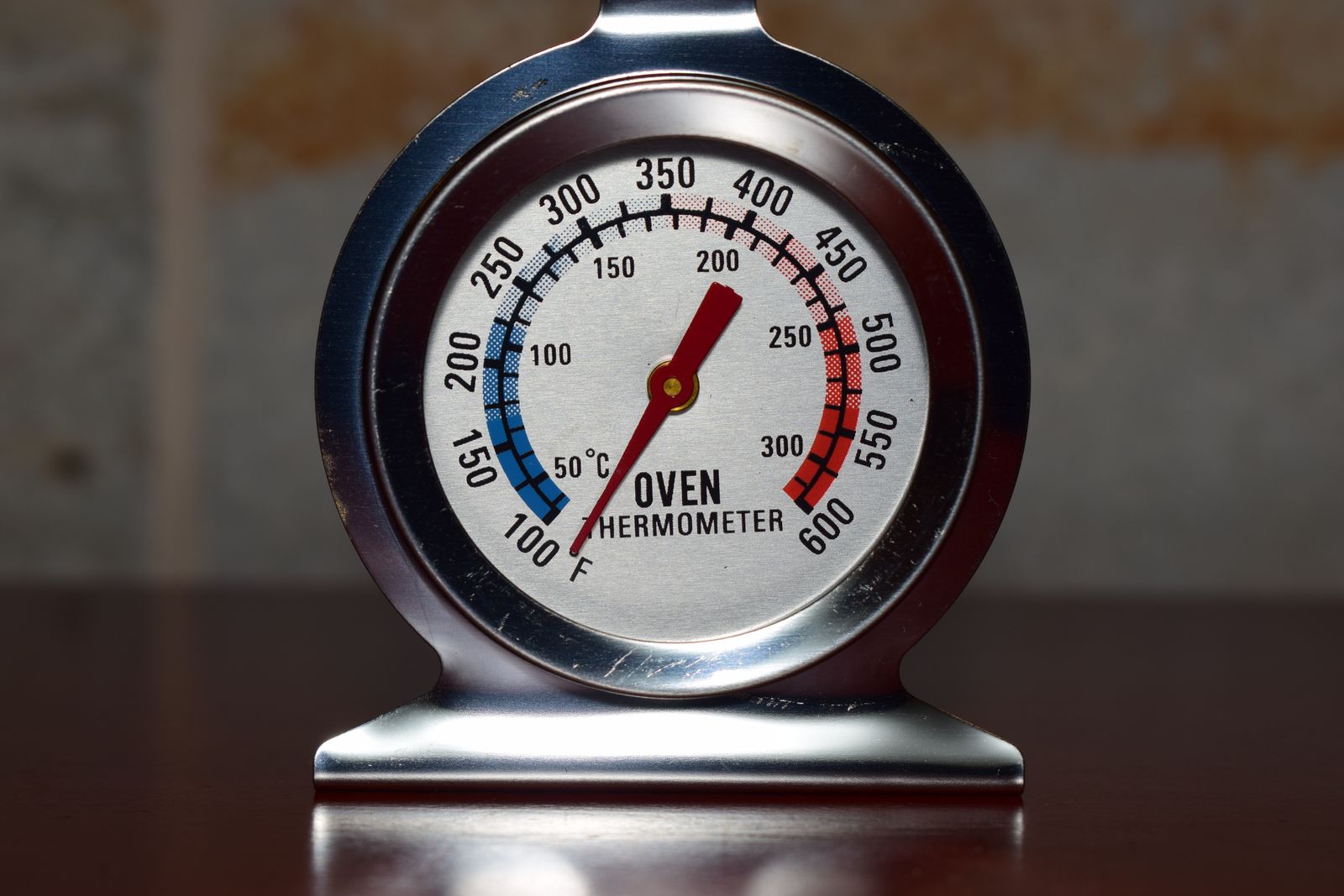
It can. University of Illinois Extension lists oven accuracy as one reason a bird runs off the chart. A cold or partly frozen turkey and a cramped pan are the others. Every time in this guide assumes the oven really is at 325°F. The dial on the oven wall does not prove that. An oven thermometer on the rack shows what the heat is doing.
Setup matters too. The Illinois Extension page calls for a roasting pan about 2 inches deep, with a rack and the bird breast side up. It says to pat the skin dry instead of washing the turkey. It also says to tent the bird loosely with foil. Remove the foil after 1 to 1½ hours so the skin can brown.
Can a pop-up timer replace a turkey internal temperature check?
No. USDA’s Turkey FUNdamentals page says a pop-up indicator is accurate to within 1 to 2°F only if it was placed accurately. It still recommends checking with a conventional food thermometer. Oregon State University Extension gives the same advice in its Turkey Basics sheet.
So a popped timer is not permission to carve. Instead, keep the probe handy and take the three readings. Treat anything under 165°F as unfinished. FoodSafety.gov and USDA both set the safe minimum by temperature.
How long should a turkey rest before carving?
Twenty minutes, so the juices can set. That is the figure in Oregon State University Extension’s Turkey Basics sheet. University of Illinois Extension gives 20 to 30 minutes for the same reason. Oregon State adds the order of operations. Rest the bird, then remove the stuffing, then carve.
One detail trips people up. The FoodSafety.gov chart lists a 3-minute rest only for beef, pork, veal, lamb and goat cuts, plus raw ham. It lists no rest time for poultry. So the 20 minutes for a turkey is about juices. The safety number is still the 165°F reading you took before the bird came out.
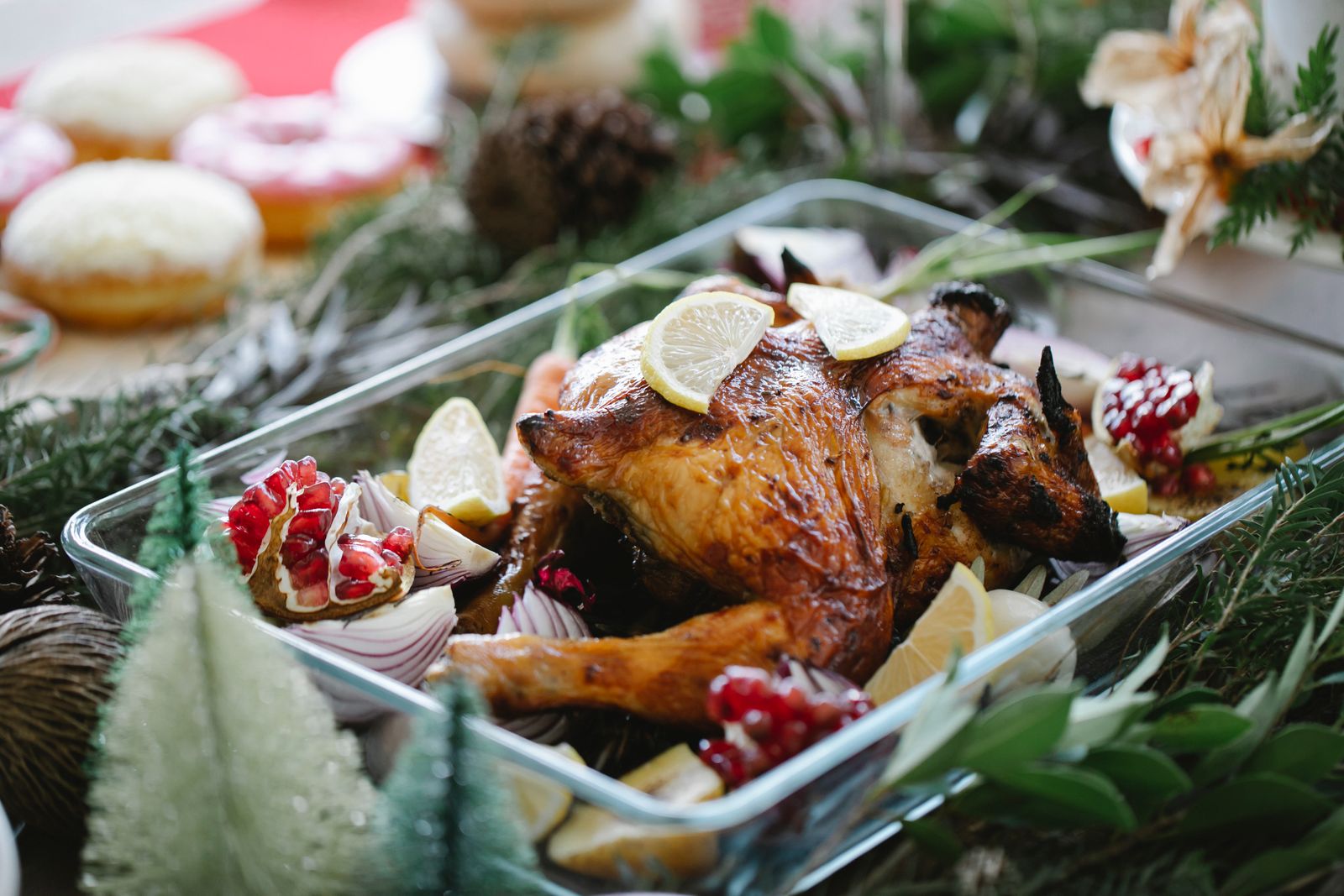
Use the wait well. The oven is free for the sides while the turkey stands. A tray from the top 10 Thanksgiving snacks keeps hungry guests busy meanwhile.
What internal temperature does turkey stuffing need?
Stuffing cooked inside the bird has to reach 165°F at its center, according to the FoodSafety.gov roasting chart. The Illinois Extension stuffed-turkey page says to push the thermometer through the cavity into the thickest part of the stuffing. A standard meat thermometer stays in for 5 minutes. An instant-read model registers after 15 seconds.
The same page says to let the turkey stand 20 minutes before removing the stuffing and carving. Also, stuffed times run longer than the unstuffed table above. There is another route. The Illinois page for unstuffed birds says to bake the stuffing separately in a casserole during the last hour or so of roasting.
What else do people ask about turkey internal temperature?
What is the safe internal temperature for turkey?
The safe minimum internal temperature for turkey is 165°F (74°C), per FoodSafety.gov and USDA. Use a food thermometer in the innermost part of the thigh, the innermost part of the wing and the thickest part of the breast. Then all three spots must reach 165°F. So must any stuffing cooked inside the bird.
Is a turkey done when the pop-up timer pops?
Not by itself. USDA says a pop-up indicator is accurate only if it was placed accurately, and it still recommends a conventional food thermometer. Oregon State University Extension gives the same advice. Confirm 165°F in the thigh, wing and thickest part of the breast before you pull the turkey from the oven.
How long does a 14 to 18 pound turkey take to roast?
FoodSafety.gov lists 3¾ to 4¼ hours for an unstuffed 14-to-18-pound turkey in a 325°F oven. A stuffed bird of that size takes 4 to 4¼ hours on the same chart. Oven accuracy and a very cold bird can change those times, so begin checking the temperature well before the shortest time is up.
Does stuffing need the same turkey internal temperature?
Yes. Stuffing cooked inside the bird must reach 165°F at its center, according to FoodSafety.gov. University of Illinois Extension says to push the thermometer through the cavity into the thickest part of the stuffing. It also suggests baking stuffing separately in a casserole during the last hour or so of roasting.
Should you trust the clock or the turkey internal temperature?
I would trust a food thermometer reading 165°F in the thigh, the wing and the breast. FoodSafety.gov and USDA both set the safe minimum by temperature. Use the schedule to decide when dinner starts, but use the probe to decide when the turkey is finished.
Put the thermometer in the thigh before the bird goes in. Then start checking early, and give the turkey its 20 minutes of standing time. More everyday kitchen guides live in the LifeStyle section.
This article is for general food safety information only and is not medical advice. Check FoodSafety.gov and USDA for the latest guidance.

 Tami Benedict