 Travis Fuller
Yoga breathing exercises, or pranayama, are a core part of yoga, not a warm-up for it. A normal breath moves about 500 ml of air in an average man, per the NIH’s StatPearls, while healthy adult lungs hold about 6 liters, per the American Lung Association. Here are ten yoga breathing exercises to practice on their own, with what the research says where it exists.
Updated November 14, 2026.
Some of these are easier to keep up than others. The ones that stick are the simple ones, belly breathing and alternate nostril breathing, because you can do them at a desk and nobody notices. The loud ones, like Lion’s Breath, are worth learning anyway. They make the quiet techniques feel easy. Most of us have been told to “just breathe” when things get tense and had no idea what that meant. These ten give you something to actually do.
1. Lion’s Breath

Lion’s Breath shows up in nearly every beginner class, and it feels silly the first time. Breathe in, then let out a loud “ha” as you breathe out and stick out your tongue, like a roar. Think of it as getting rid of all the junk you don’t want to carry around. It loosens the jaw and face, two places most of us hold tension without noticing.
2. Standing Deep Breathing Pranayama

Pranayama is the general word for breath control in yoga. In the standing version, you lace your fingers under your chin with your elbows framing your face. Breathe in through your nose for a count of six, with your belly pulled in and your lungs full. Then breathe out through your mouth with a loud “ha” for another six. As you do, tilt your head back and bring your elbows down and together. The point is to take a much bigger breath than you normally would.
3. Belly Breathing

Belly breathing, also called diaphragmatic breathing, sits underneath most of the other techniques here. You tighten the diaphragm and let your belly rise and fall while your chest stays fairly still. If you’ve ever watched a sleeping baby or dog, you’ve seen it done naturally. The Cleveland Clinic lists lower blood pressure, a lower heart rate and help relaxing among its benefits. It suggests starting with five to 10 minutes about three to four times a day. This is the breath most teachers use in savasana, the lying-down rest at the end of class.
4. Ujjayi Breathing

Ujjayi, also called ocean breath or psychic breath, has you breathe out through your nose while you tighten the back of your throat a little. That makes a soft rasping sound, a bit like waves. The breath is steady and even, and the sound gives you one constant thing to listen to, so it works well as a breath for meditation.
5. Bee Humming (Bhramari)
Press your index fingers on the small flap of cartilage at your ears to block outside sound. Breathe in, then make a steady, high-pitched hum through a closed mouth as you breathe out. You can keep your fingers pressed in, or press them in and out while you hum. This is the one to reach for when you need to calm down from anger fast. Repeat it six or seven times, or until you feel calmer.
6. Kapalbhati (Skull-Shining Breath)
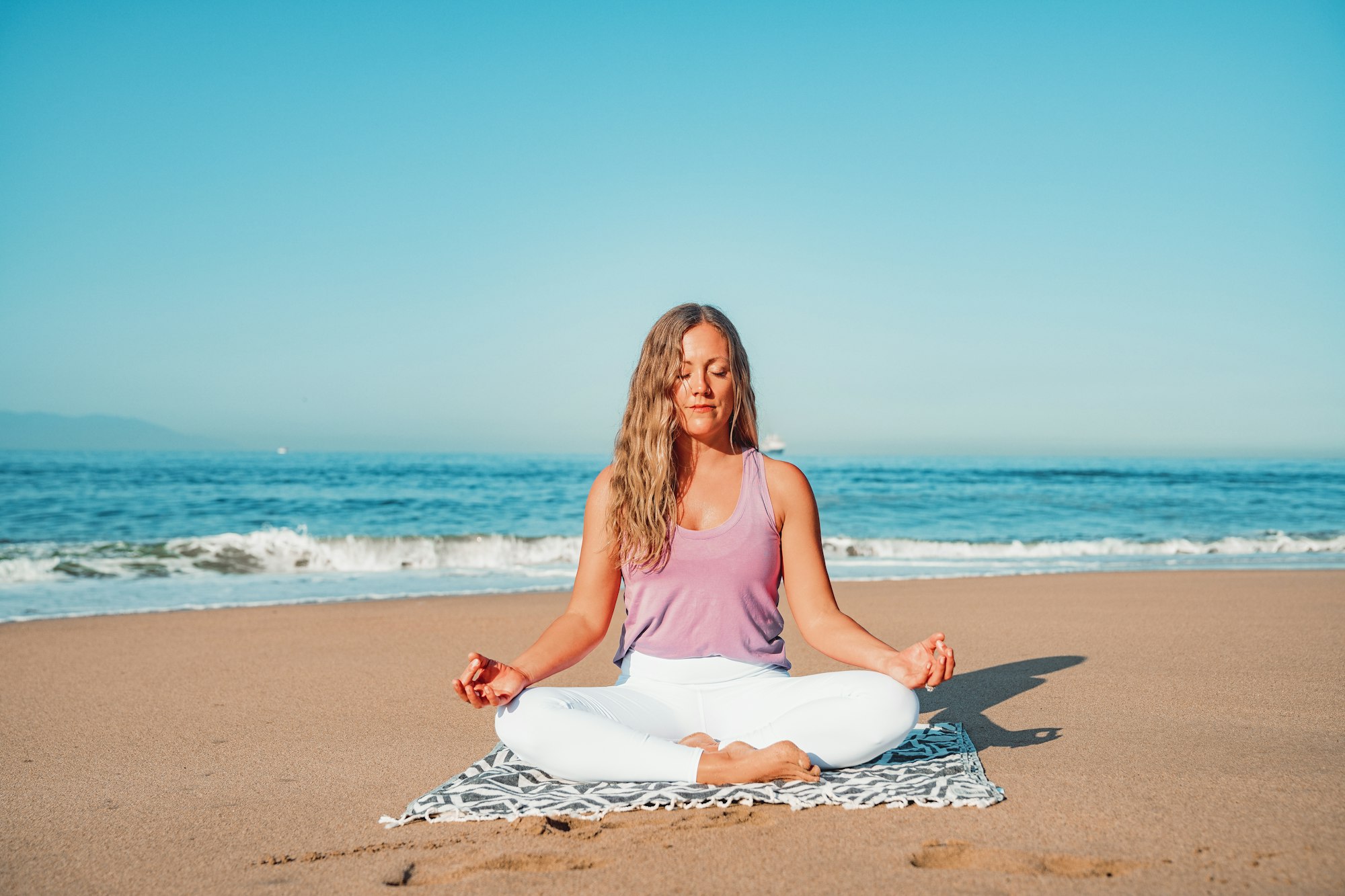
Kapalbhati is the opposite of the slow breaths above. You push out short, sharp breaths by snapping your belly button in, and let each inhale happen on its own. It’s a bit like blowing out a lot of birthday candles in a row. It’s usually done after the poses to clear out stale air. Start with a short round and stop if you feel dizzy.
7. Alternate Nostril Breathing (Nadi Shodhana)
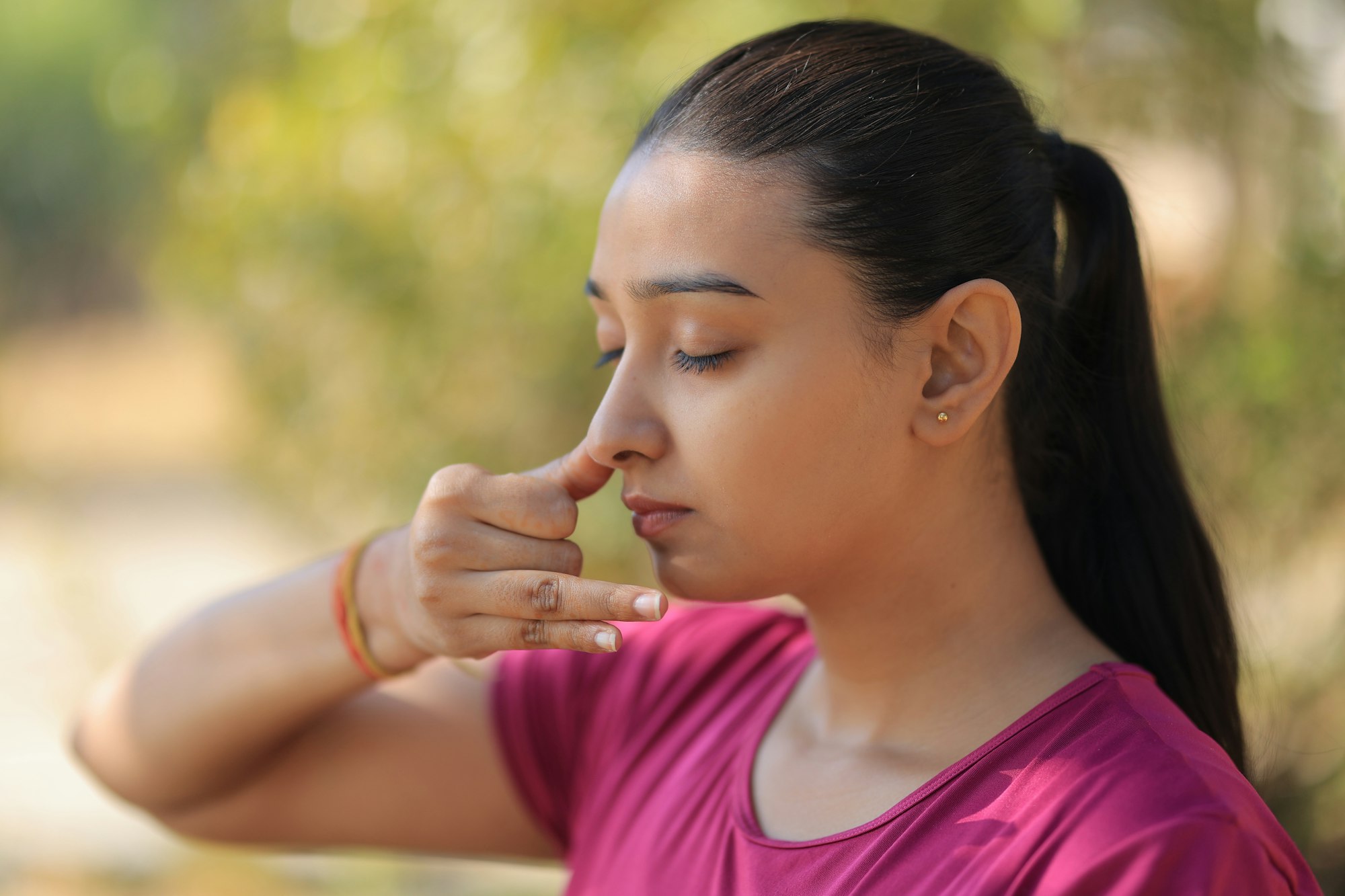
You breathe in through one nostril and out through the other, closing each side with a finger. It sounds odd, but this one has the most research behind it on this list. A 2018 study found that men who practiced it for 30 minutes a day for three months had lower perceived stress than a control group, per Healthline’s summary of the research. A 2020 study of 100 healthy medical students found better pulse and blood pressure readings after four weeks.
A small 2017 study of competitive swimmers found that pranayama, including this technique, improved respiratory endurance after 30 minutes a day, five days a week, for a month. The swimmers did two other breathing practices too, and the researchers said larger studies are needed.
8. Focusing on Inhalation

This one doesn’t change your breath at all. You just watch it. Notice when the inhale speeds up or slows down, and leave it alone. Most of us only notice our breath when it’s gone, like after a run up the stairs or with a stuffy nose. This is a habit of attention more than a technique, and you can do it anywhere, even in the middle of a tense meeting. If you want the bigger picture on why slow, steady breathing matters, see the benefits of breathwork.
9. Focusing on Exhalation

Breathe in, then stretch the exhale out as long as you comfortably can. Keep going for about five minutes. It takes more effort than it sounds, so do it somewhere without a lot of pollen or pollution in the air. This one is sometimes mislabeled Sitali breath. Real Sitali is a cooling breath. You curl your tongue, breathe in over it, then close your mouth and breathe out through your nose, per Yoga International.
10. Attaching an Emotion to Your Breath
Pair a feeling with each half of the breath. Breathe in calm, breathe out anger. Or breathe in joy and breathe out gratitude. Most of us have counted to ten to cool down at some point, and this works the same way. It gives the practice a purpose and keeps your mind on your breath instead of your to-do list.
Holding your breath for a moment between the inhale and the exhale is worth practicing too. It’s a small test of stillness. If you want to build these into a daily yoga routine, start with belly breathing and add one new technique a week. People with stiff joints can pair them with the gentle poses in our guide to yoga for arthritis. If breathing exercises ever leave you dizzy or bring up anxiety, stop and talk to a doctor or counselor.
FAQ: Yoga Breathing Exercises
Which yoga breathing exercise is best for stress?
Alternate nostril breathing has the most research behind it for stress. A 2018 study found that men who practiced it for 30 minutes a day for three months had lower perceived stress than a control group. Belly breathing is a good second choice, and the Cleveland Clinic lists help relaxing among its benefits.
Can yoga breathing lower blood pressure?
Some techniques can help. The Cleveland Clinic lists lower blood pressure and heart rate among the benefits of diaphragmatic, or belly, breathing. A 2020 study of 100 healthy medical students found better pulse and blood pressure readings after four weeks of alternate nostril breathing. Keep taking any blood pressure medicine your doctor prescribed.
How often should I practice these breathing exercises?
The Cleveland Clinic suggests starting belly breathing with five to 10 minutes about three to four times a day. The alternate nostril studies used longer sessions: 30 minutes a day for three months in the 2018 stress study, and 30 minutes five days a week for a month in the swimmer study.
This article is for general information only and is not medical advice. Talk to a licensed clinician about your own situation.

 Del Bailey


 Madeline Marshall