
 Del Bailey
Adults who want to stay active in winter are working toward the same weekly total the CDC sets all year: at least 150 minutes of moderate activity and 2 days of muscle strengthening. The CDC says that total can be split into short sessions. What keeps it going is a plan with an indoor backup.
Published October 24, 2026.
I live in Colorado, and winter has taught me that the routine breaks long before the fitness does. The first dark evening after the clocks change is usually when a plan quietly falls apart. After years of building exercise habits, I trust a small routine I will actually keep over an ambitious plan, and winter is when that matters most.
How much physical activity do adults need per week
Winter does not change the target. The CDC says adults need at least 150 minutes of moderate-intensity physical activity a week, and the example it gives is brisk walking. The same page says that can also be 75 minutes of vigorous-intensity activity.
| Guideline | What the CDC says for adults |
|---|---|
| Moderate aerobic activity | At least 150 minutes a week, such as brisk walking |
| Vigorous alternative | 75 minutes of vigorous-intensity activity a week |
| Muscle strengthening | At least 2 days a week, working all major muscle groups |
| Spreading it out | Activity can be spread across the week and broken into smaller chunks |
Two lines on that CDC page matter most in a cold month. It says you can spread your activity out during the week and break it up into smaller chunks of time. It also says some physical activity is better than none. A dark, freezing Tuesday does not have to be a lost day, because a short session still counts toward the week.
A CDC tips page does the math. It says the 150 minutes can be split into 22 minutes daily, or 30 minutes a day on 5 days a week. If you are starting from less, it suggests a few extra minutes today and a few more tomorrow.
The muscle-strengthening line names legs, hips, back, abdomen, chest, shoulders and arms. Those are the groups to cover on at least 2 days, indoors or out.
Is it okay to work out outside in the winter
For most people, yes. Mayo Clinic Sports Medicine says exercise is safe for almost everyone, even in cold weather. It says people with asthma, heart problems or Raynaud’s disease should check with their doctor first. When the temperature drops below 0°F or the wind chill is extreme, it suggests a break or an indoor workout instead.
In my experience the mistake is almost always overdressing. You start out cold, bundle up, and you are sweating a mile later. Mayo Clinic calls dressing too warmly a big mistake and suggests layers you can take off as soon as you start to sweat. Starting a little cool is the usual fix.

Two smaller things decide whether an evening walk happens at all. If it is dark, Mayo Clinic says to wear reflective clothing, and it suggests shoes with enough traction for ice and snow. It also says to let someone know your route and when you expect to be back.
On the days the forecast rules out a walk, the indoor version takes over.
Indoor winter workouts
The CDC’s strengthening goal is easy to meet at home. The page asks for work on all major muscle groups on at least 2 days a week and does not name equipment. A short set of resistance band exercises can work most of those groups in a living room.
The CDC’s page on what counts lists lifting weights, working with resistance bands, body-weight moves such as push-ups or sit-ups, and some yoga postures. It defines a set as 8 to 12 repetitions, done until another repetition is hard without help.
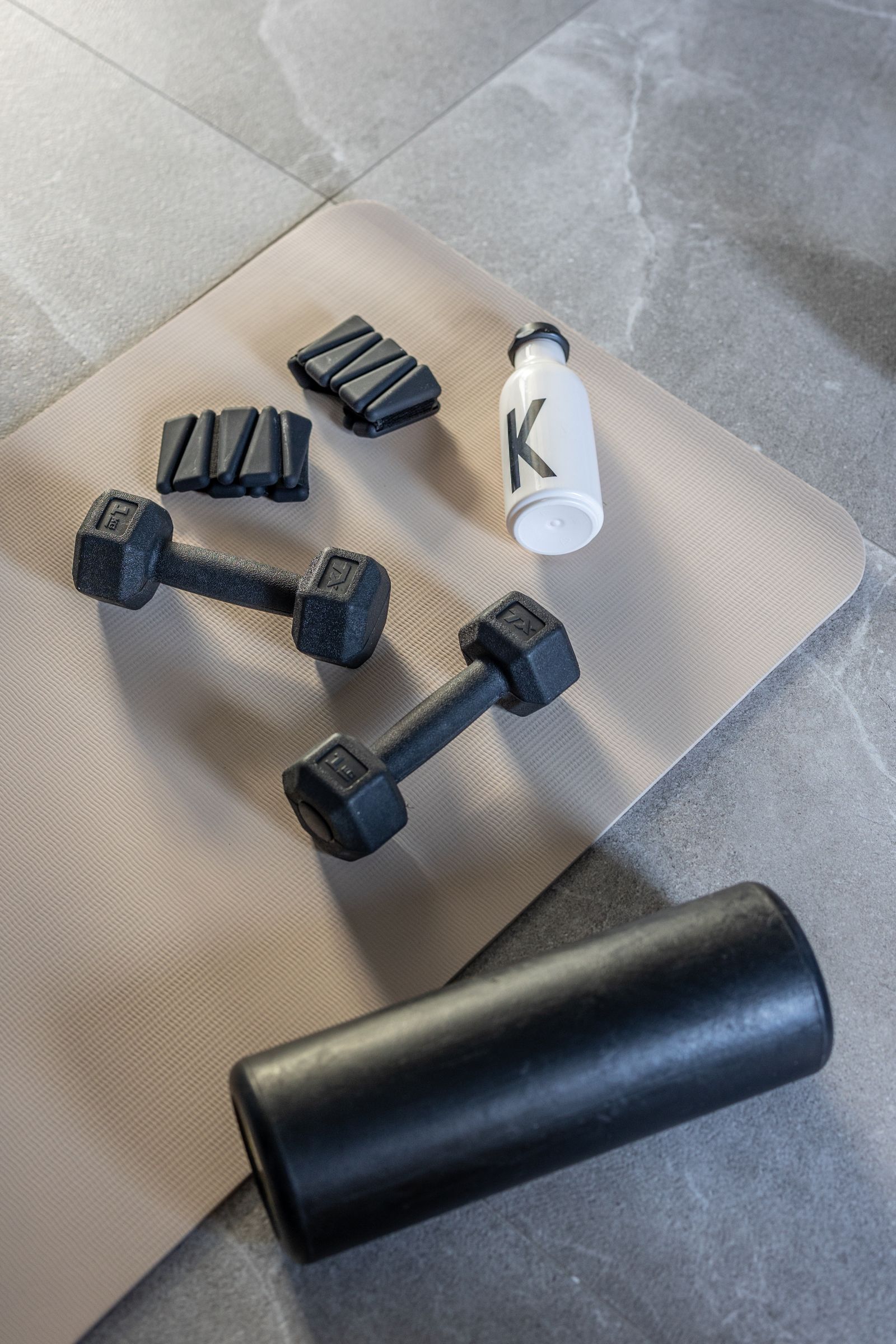
The aerobic half does not need weather either. Brisk walking is the CDC’s own example, and it does not need a trail. Because the CDC says activity can be broken into smaller chunks, short indoor sessions still count toward the weekly total. For bad-weather days, the CDC’s tips page suggests heading to the local mall for a climate-controlled walk. The CDC’s list of moderate activities also includes water aerobics, which an indoor pool keeps going all winter.
Shorter days are part of the winter problem too. Our post on vitamin D in winter covers what the research says about low winter daylight. That is a separate question from how much you move.
How to stay active in winter months
Most of what keeps people moving in winter is logistics. These are the habits I lean on, and none of them are medical advice:
- Track the week, not the day. The CDC’s targets are weekly totals, so a missed Tuesday can be covered on Thursday.
- Keep a bad-weather version. Decide ahead of time what the indoor swap is for a walk you cannot take. Deciding at 6 a.m. in the dark rarely goes well.
- Set the gear out the night before. Shoes, layers and a hat by the door remove one excuse.
- Attach it to something you already do. A walk after dinner or a few minutes of strength work while the coffee brews needs no new time slot.
- Find minutes in errands. The CDC suggests parking farther away and walking briskly to your destination. Those minutes count like any other.
- Make it a date. The CDC suggests a walking date with a friend or family member. A walk someone else is waiting on is harder to skip in the cold.
- Keep shoes where you work. The CDC suggests walking shoes and socks in your car for a walking lunch break. In December, that may be the only daylight walk you get.
- Shrink the plan on bad weeks. The CDC says some activity is better than none, so a short session still counts.
Winter in Colorado runs long, so I build the plan around its worst stretch, the cold, dark weeks of January.
Frequently asked questions about how to stay active in winter
How much exercise do you need to stay active in winter?
The CDC sets the same adult target all year: at least 150 minutes of moderate-intensity activity a week, or 75 minutes of vigorous-intensity activity. It also lists at least 2 days a week of muscle-strengthening activity. Your own needs may differ, so a clinician can advise you.
Can short workouts help you stay active?
Yes. The CDC says you can spread activity out during the week and break it up into smaller chunks of time. It also says some physical activity is better than none. Its tips page suggests starting with a few extra minutes and adding a few more the next day.
Does indoor exercise count toward the weekly goal?
Yes. The CDC counts minutes of activity and days of strength work, and its adult guidelines page does not say where they have to happen. Brisk walking, its example of moderate activity, can be done on a treadmill or an indoor track.
How do you know if a winter workout is moderate intensity?
The CDC uses a talk test. At moderate intensity you can talk but not sing the words to your favorite song. At vigorous intensity you cannot say more than a few words without pausing for a breath.
Should you talk to a doctor before exercising in the cold?
Mayo Clinic says people with conditions such as asthma, heart problems or Raynaud’s disease should check with their doctor first. Anyone with a health condition can ask a clinician about winter exercise.
This article is for general information only and is not medical advice. Talk to a licensed clinician about your own situation.


 Madeline Marshall