 Megan Tate
A gratitude jar is a jar where you drop one note about something good, then read the whole pile later. The best gratitude jar ideas keep the notes tiny, the prompts easy and the opening night on the calendar. Here are eight ways to run one, plus prompts and the best nights to open it.
Published November 11, 2026.
How does a gratitude jar work?
You write one small good thing on a slip, fold it and drop it in. That is the whole system. The payoff comes months later, when you dump the jar on a table and find out how much you had already forgotten.
I have kept a family gratitude jar going through holidays for six, and my one piece of advice is to make the slips smaller than you think. A full sheet of paper feels like homework. A strip the size of a fortune cookie slip feels like ten seconds. Most of us quit a good habit because it asked for too much on a tired weeknight.
Does it do anything? Harvard Health says most of the studies on gratitude find an association with well-being, though they cannot prove cause and effect. In one study it describes, people who wrote a few sentences a week about what they were grateful for, over 10 weeks, reported feeling more optimistic about their lives. So a jar may help, and it costs you a jar you already own and some scrap paper. The same article has an honest catch: children and teens who wrote thank-you letters did not see their own well-being improve. Don’t expect a jar to fix a grumpy week.
| Jar idea | Best for | Good night to open it |
|---|---|---|
| One slip a day | Busy adults | New Year’s Eve |
| Dinner table jar | Families with clashing schedules | Thanksgiving |
| Color-per-person jar | Big households and holiday tables | Thanksgiving or Christmas Eve |
| Question-draw jar | Anyone who says “nothing” | Any family night |
| Mementos jar | Non-writers and younger kids | End of summer |
| Thank-you note jar | People who mean to thank others | Mailed monthly |
| Rough-season jar | A hard stretch | When you need it |
| Gift jar | Someone hard to shop for | Their birthday |
8 gratitude jar ideas worth trying
Pick the one that matches how your house actually runs, not how you wish it ran. Each idea below says who it suits so you can skip the rest.
The one slip a day jar
Pick this if you want the least effort that still works. It asks for one sentence, and the sentence can be as small as “the coffee was hot.” It suits adults and busy parents best, because it fits in the two minutes you already spend waiting on something. Use a wide-mouth jar so a hand fits in later, and keep the paper next to it. Skip it if you want the whole family in on it; the dinner table jar does that better.
The dinner table jar
This one is for families whose schedules never line up. Everyone writes a slip at the table, and nobody has to say it out loud, which matters with a teenager who goes quiet at the word “feelings.” Keep a pen and a stack of slips right beside the salt, because a jar in another room dies within a week. I would rather have a messy jar on the table than a pretty one in a cupboard, and of the eight, this is the one I would start with. Skip it if your family rarely eats together.
The color-per-person jar
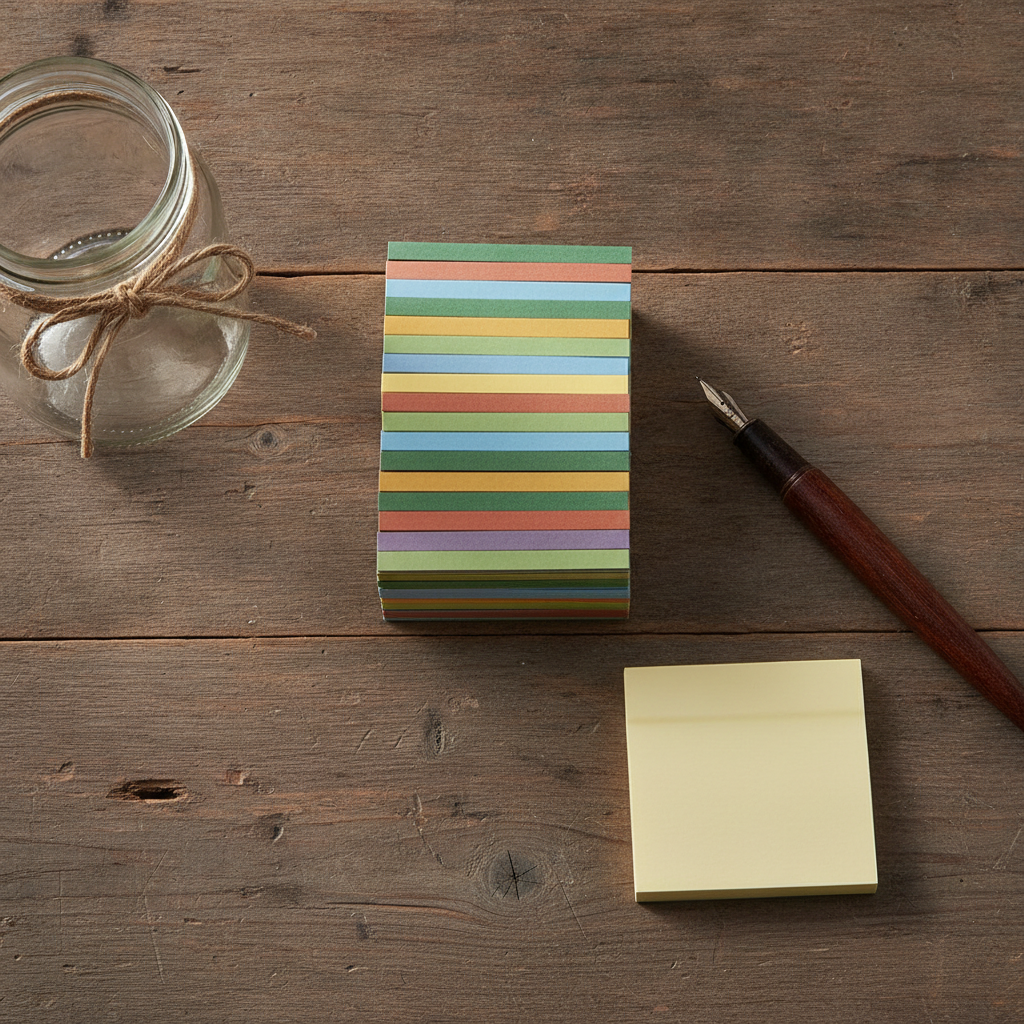
Reach for this when you have a big family and want to see who is actually adding. Give each person a paper color, and the pile tells a story when you open it. It is also the sneakiest way I know to get a kid who loves sorting to join in. Colored index cards cut into strips work fine, and sticky notes are the lazy option that works too. Skip it if you live with one or two people; the color code is overkill.
The question-draw jar
This is for the reluctant ones, the people who answer “nothing” when you ask what they are thankful for. Instead of a blank slip, you draw a prompt from the jar and answer that. Prompts beat blank paper every time, in my experience. Write twenty or thirty prompts in one sitting, cut them apart and refill as they run out. There is a starter list further down. Skip it if your crew already has plenty to say.
The mementos jar
Choose this if writing is not your thing. Drop in a ticket stub, a shell from a beach day, a receipt from a deep-dish night out. It suits younger kids and anyone who thinks in objects, and opening it feels like emptying your pockets after a good trip. Keep the items flat and small, and stick a tiny label on anything you will not remember by December. Skip it if clutter makes you twitchy.
The thank-you note jar
Good for anyone who keeps meaning to thank someone and never does. The jar holds the notes you have written but not yet sent, and once a month you empty it into the mailbox. Harvard Health describes a University of Pennsylvania study in which 411 adults wrote and delivered a thank-you letter and reported a big jump in happiness scores, with the effect lasting about a month. I like this version because the gratitude leaves the house. Skip it if writing a whole note feels like a chore; the one slip a day jar asks less.
The rough-season jar
This is the jar for a hard stretch, like a long winter or a month when everyone in the house takes turns being sick. The rule is that small and true beats big and cheerful. “The mail came on time” counts. Skip it if things are going fine; a regular jar is more fun to open. A jar should never turn into a guilt machine, so skip a day without apology. If a low mood hangs around, talk to your doctor or a counselor. If you are ever in crisis, call or text the 988 Suicide & Crisis Lifeline.
The gift jar
Make this for someone who has everything. Fill it with thirty slips about what you appreciate in them, each one a specific thing and not just “you’re great.” It is the cheapest gift I know that gets a quiet moment out of a grown-up. Start a week early, and tie on a tag that says “open when you need it.” It is also the one I would rank last for everyday use, since it is a one-time gift, not a habit. Skip it if you are short on time before the occasion.
Gratitude jar prompts for kids and adults
A good prompt is narrow. “What are you grateful for?” is so big that people freeze, while “Who made you laugh today?” gets an answer in three seconds. Here are prompts to cut into strips.
For kids and the young at heart:
- Who helped you today?
- What was the best thing you ate this week?
- What made you laugh?
- What did you see outside that you liked?
- What are you glad you did not have to do?
- Which song was stuck in your head, and are you okay with that?
For adults:
- What went smoothly that I almost did not notice?
- Who showed up for me this week?
- What comfort would I miss if it disappeared?
- What did I finish, even a small thing?
- Which ordinary moment would I happily replay?
- What is one thing I used to want that I now have?
Ask a teenager about their day and the first answer is “fine.” The trick is the same for a jar: ask something smaller than the question you want answered.
How to keep a gratitude jar going
The jar itself is easy. The hard part is week three. A few things have kept ours alive through busy seasons.
Tie it to something you already do. A weekend morning, before the house wakes up, is my favorite slot, with coffee and one slip. If you are building a routine anyway, your morning routine is the natural place to hide it. For a family, dinner is the other anchor.
Keep the bar low. One slip, one line, no grammar. Don’t read slips aloud unless the writer wants that, and never grade one. A silly slip about the dog is a real slip.
Leave it where people walk. A jar in a cabinet is a dead jar. Put it by the coffee maker or the dinner table, with the paper and pen beside it, and refill the paper before it runs out. Skipped a week? Everyone does. Drop a slip in and carry on.
When to open your gratitude jar
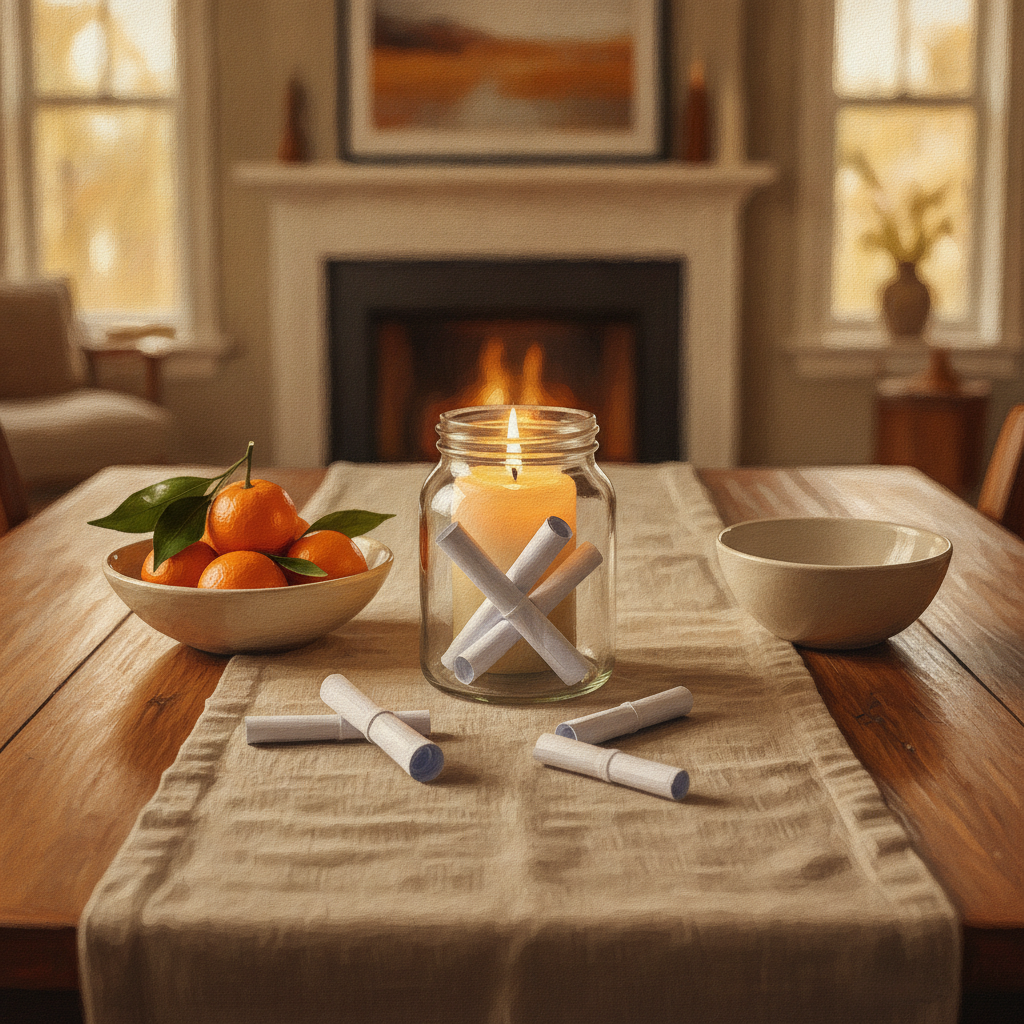
Start the jar by the first week of November if you want it ready for Thanksgiving. Opening it after the meal gives the table something to do besides watch the game, and it hands the quiet relative a turn without putting anyone on the spot. Holiday tables get loud, and if the season already feels like too much, these steps for holiday stress are worth a read first.
New Year’s Eve is the other classic. Read the slips by candlelight, pick your favorites to keep and recycle the rest. It beats a resolution list because you are looking back before you look ahead, and if you do want goals afterward, these tips for keeping resolutions on track pair well with it. A birthday works too, or the last night of a summer trip, when the jar is one more thing to pack.
Open it early on a bad day, too. That is what the jar is for.
Frequently asked questions about gratitude jars
How often should you add to a gratitude jar?
Once a day is the standard answer, but I would start with once a week and add more only if it feels easy. A jar you keep up for a year beats a daily one that dies in March.
What do you do with the notes at the end of the year?
Read them all in one sitting, then keep a handful of favorites and recycle the rest. The favorites tuck nicely into a box of holiday things, so they turn up again next December. Starting a fresh jar on January first feels good, too.
What if my family will not join in?
Start it yourself and leave the paper out. Don’t nag. People tend to join once they see a slip about themselves in there, and a jar that is not a chore is easier to sell.
Can you keep a gratitude jar on your phone instead?
You can, and a shared note works if that is what gets used. I still lean toward a real jar, because you can see it from across the room and pouring out a pile of paper on the table is half the fun.
This article is for general information and isn’t medical advice; talk to your doctor about your own health.
 Del Bailey