
 Avery Walsh
Gentle yoga is the kind that suits burnout: restorative, yin or a slow gentle hatha class, with poses like child’s pose and legs up the wall. Yoga may ease stress, but it is not a treatment for burnout or depression. Start with restorative, and skip hot or power yoga while you are worn out.
What is the best yoga for burnout?
Restorative yoga, and I would not start anywhere else. Restorative classes use blankets, blocks and a bolster to hold you up, so you stay in each pose for several minutes without working. When you are running on empty, that is the point. Nothing in a restorative class asks you to try harder.
I do most of my yoga at home, on a mat in the living room, and that habit has taught me when to push and when to stop. Where I live in Southern California, yoga studios seem to sit on every corner, and the schedules lean toward fast, sweaty classes. Those are fine on a good week. On a worn-out week, I roll out the mat at home and lie down.
If you have ever read a class description like “dynamic power flow” and felt tired just reading it, you already know which side of the schedule to avoid right now. The gentle end of it is where you want to be.
First, a note on the word. The World Health Organization (WHO) lists burnout in its disease classification as an occupational phenomenon, not a medical condition. It describes a syndrome from chronic workplace stress that has not been managed well, with exhaustion, growing distance from the job and less sense of effectiveness. Yoga is a way to give a tired body and mind a break. It does not fix a job. If you want the bigger picture, our guide to the stages of burnout walks through how it builds.
Restorative vs yin vs gentle hatha: which one first?
These three get lumped together, but they feel different. Here is how I would sort them for someone who is worn out.
- Restorative yoga. Mostly lying down, fully supported, long holds. Best for: the days you can barely think. Skip it if you get restless lying still for ten minutes; a gentle hatha class gives you more to do.
- Gentle hatha. Slow movement between simple poses, with a teacher or video talking you through. Best for: people who want a little movement and a clear plan. Skip it if you are in a class that rushes; “gentle” on a schedule can mean very different things, so ask before you go.
- Yin yoga. Floor poses held for a few minutes, aimed at the hips, back and legs. Best for: stiff, desk-bound days when you still have a little energy. Skip it if your knees or hips are cranky. Deep, long holds can be too much on a sore joint.
My call: restorative first, gentle hatha second, yin when you have some energy back. The overrated one is the flowing, sweaty class that gets sold as the cure for stress. More on that below.
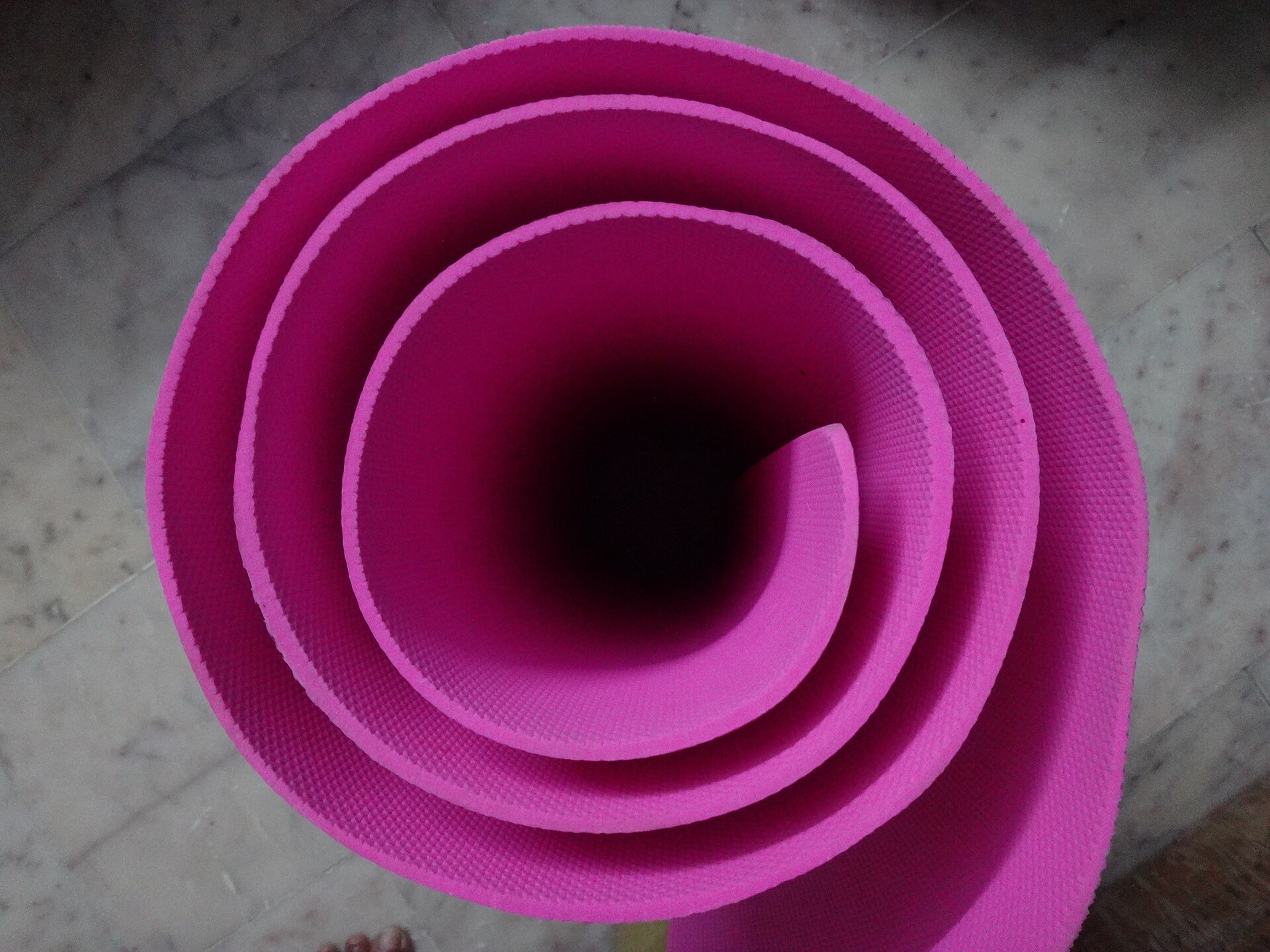
Yoga poses for burnout: six gentle ones
None of these needs much flexibility. Props help, and you do not have to buy them. A folded blanket works as a bolster, and a stack of firm books can stand in for a block. Each one has a “best for” and a “skip it if.”
Child’s pose
Kneel, sit back toward your heels and rest your forehead on the mat, a block or a pillow. Best for: a quick reset at any hour. Skip it if your knees complain; put a rolled blanket behind them or choose another pose.
Legs up the wall
Sit sideways next to a wall, then swing your legs up as you lie back. It feels a little silly for the first minute. Then it doesn’t. Best for: tired legs and a restless mind in the evening. Skip it if you have glaucoma or severe high blood pressure and have not checked with your provider; the National Center for Complementary and Integrative Health (NCCIH) lists both among the conditions that may call for changes in yoga.
Supported forward fold
Sit with your legs out and a bolster or a stack of pillows on your lap. Fold forward and rest your arms and head on it. Best for: a tight back after a long day at a desk. Skip it if bending forward hurts your lower back.
Reclined bound angle
Lie back with the soles of your feet together and your knees falling open, with a pillow under each knee. Best for: slow breathing. Skip it if your hips or groin feel pinched.
Supine twist
Lie on your back, hug one knee in, and let it drop across your body. Best for: wringing out a stiff back. Skip it if a twist bothers your spine, and go gently either way.
Savasana
Lie flat, arms at your sides, and do nothing for five minutes. Best for: ending any session. Skip it if you tend to doze off somewhere you should not; set a timer.
A 15-minute yoga sequence for a worn-out evening
Here is the order I would use, and the rule behind it: work from the floor up, never push into a stretch, and stop when you feel done. If a pose bites, back off. A rough minute count looks like this.
- Child’s pose, 2 minutes.
- Supported forward fold, 3 minutes.
- Reclined bound angle, 3 minutes.
- Supine twist, 1 to 2 minutes each side.
- Legs up the wall, 3 minutes.
- Savasana, as long as you like.
Pick a time you will keep, like right after dinner or before bed. If 3am wakeups are part of your picture, our post on why you wake up at 3am covers common causes. Slow breathing through the poses is plenty; skip the fast, forceful breathing styles for now.
Which yoga to skip when you are worn out
The overrated pick is hot yoga, and power yoga is close behind. Both are sold as stress busters, and both ask a lot of a body that is already drained. The NCCIH notes that hot yoga carries special risks of overheating and dehydration. Power yoga is not dangerous for everyone, but it is a workout, and a workout on top of exhaustion can leave you more wiped out than before.
Best for hot and power classes: a week when you feel good and want a challenge. Skip them if you are sleeping poorly, running on caffeine or dreading Monday. Beach days are a decent comparison. A long afternoon in the sun is lovely when you feel well, and a bad idea when you are already spent.
The NCCIH also advises beginners to avoid extreme moves such as headstands, shoulder stands, the lotus position and forceful breathing. None of those belong in a burnout week.

Does yoga help with burnout?
It may help with the stress side of it. A 2020 review of 12 studies with 672 healthy adults, summarized by the NCCIH, found yoga helped on measures of perceived stress in every one. That is encouraging, but those were healthy adults and not people diagnosed with burnout.
For mood, the picture is more modest. The same NCCIH page says yoga can be a helpful addition to depression treatment, but there is little evidence of benefit for people with anxiety disorders. A 2021 NCCIH-supported study of Kundalini yoga for generalized anxiety disorder found it helped, though less than cognitive behavioral therapy. So think of yoga as one support among several. Sleep, time off and real changes at work matter too, and our post on how to manage holiday stress has easy ones to start with.
When to talk to a doctor or counselor
Yoga is not a treatment for burnout or depression. If you feel exhausted most days, cannot sleep, feel hopeless or find that work or home life is slipping, talk to a doctor or a licensed counselor. The NCCIH says plainly not to use yoga to postpone seeing a health care provider about a medical problem.
If you are in crisis or having thoughts of suicide, call or text 988 to reach the 988 Suicide and Crisis Lifeline, any time. In an emergency, call 911.
The NCCIH also says yoga is generally safe for healthy people when done properly, with injuries mostly sprains and strains. Check with your provider first if you are pregnant, are an older adult, or have an injury, balance problem, or one of the conditions noted above. A qualified teacher helps, especially at the start.
Frequently asked questions about yoga for burnout
Can yoga cure burnout?
No. WHO describes burnout as an occupational phenomenon tied to long-running workplace stress, so rest, workload and support matter as much as anything you do on a mat. I use yoga as a way to wind down, and I would still talk to a doctor if the exhaustion hangs on.
How often should I do yoga for burnout?
Short and regular beats long and rare. I would aim for a 15-minute session a few evenings a week and see how you feel. If you are too tired some nights, one pose is enough. Start small and add time only if it feels good.
Is restorative or yin yoga better for burnout?
Start with restorative. It asks the least of you, and you can do it with a few pillows. Yin is a good second step once you have some energy, but long holds can be hard on sore knees and hips.
Is hot yoga bad for burnout?
I would skip it for now. The NCCIH points to overheating and dehydration as special risks of hot yoga, and a drained body has less room for either. Come back to it when you feel well again.
This article is general information, not medical advice. Talk with your doctor or a licensed counselor about your own health, especially if you feel burned out, anxious or low.

 Del Bailey

 Madeline Marshall