
 Crystal Amelco
These eight glute exercises are the Bulgarian split squat, curtsy lunge, kick back and kick in, lying leg lift, single leg deadlift, barbell hip thrust, fire hydrant with a kick and sumo squat with heel raise. Together they work all three glute muscles: the gluteus maximus, gluteus medius and gluteus minimus. Do them at least 2 days a week.
Updated October 27, 2026.
There’s nothing better than a bottom that fills out your jeans. If you want moves that work your glutes, this list was written for you. Anyone who has lifted weights for years builds a workout the same way: a squat, a hip hinge, a move for the sides and a hold at the top. This list has one of each, so you cover all the bases of your behind. The CDC says adults should do muscle-strengthening activity on at least 2 days a week, working all the big muscle groups. Two glute days cover your hips and legs, and you can add upper-body and core work to round out the guideline. Mix in some of the CDC’s 150 minutes of weekly moderate aerobic activity around them. Most of us have had a week where the gym bag never left the car, so don’t try to do it all at once. If you are new to lifting, have a joint problem or feel sharp pain, stop and ask a doctor or trainer to check your form.
Bulgarian split squat for glutes
Place one foot on a chair behind you. Using the standing leg, bend your knee and hip down into a squat. Push off your heel and return to standing. Do three sets of 10 on each leg.
Curtsy lunge
Stand hip width apart with your hands on your hips. Step the right foot back and to the left, behind your left foot, and bend both knees into a curtsy. Keep your chest up and do not bend forward. Step back to the start, then repeat with the left foot. Do three sets of 20 alternating legs.
Kick back and kick in
Get on all fours with your body in one straight line from your head to your tailbone. Raise your left leg with the knee bent at 90 degrees and kick it up toward the sky 10 times. Keeping the leg raised, bend the knee all the way in, until your heel almost kicks your own butt, then slowly return to a 90-degree bend. Repeat 10 times. Do the circuit on the other leg and go through it 3 times in all.
Lying leg lifts for the outer glutes
Lie on your side with your legs stacked and your head propped on one elbow. Steady yourself with the other hand on the floor in front of your torso and lift one leg toward the ceiling with the toes pointed. Do 3 sets of 20 on each leg.
Single leg deadlift
Hold a dumbbell in each hand, hinge at the hips and raise one leg behind you, keeping the other knee slightly bent. The dumbbells should come close to your bent knee at the lowest point while your back stays straight. Return to standing without letting the raised leg touch down, and keep your weight on the standing leg. Do 15 on each leg, then two more sets of 15 per leg.
Barbell hip thrust for glutes
You need a bench. Rest your lower shoulder blades on the bench and sit nearly upright on the floor, with the barbell across the front of your upper thighs and both hands at your sides holding it. Dig your heels into the floor and use your glutes to push up into a bridge, keeping the barbell on the front of your thighs. Hold the top for a couple of seconds, then lower slowly. Do 3 sets of 10.
Fire hydrant with a kick
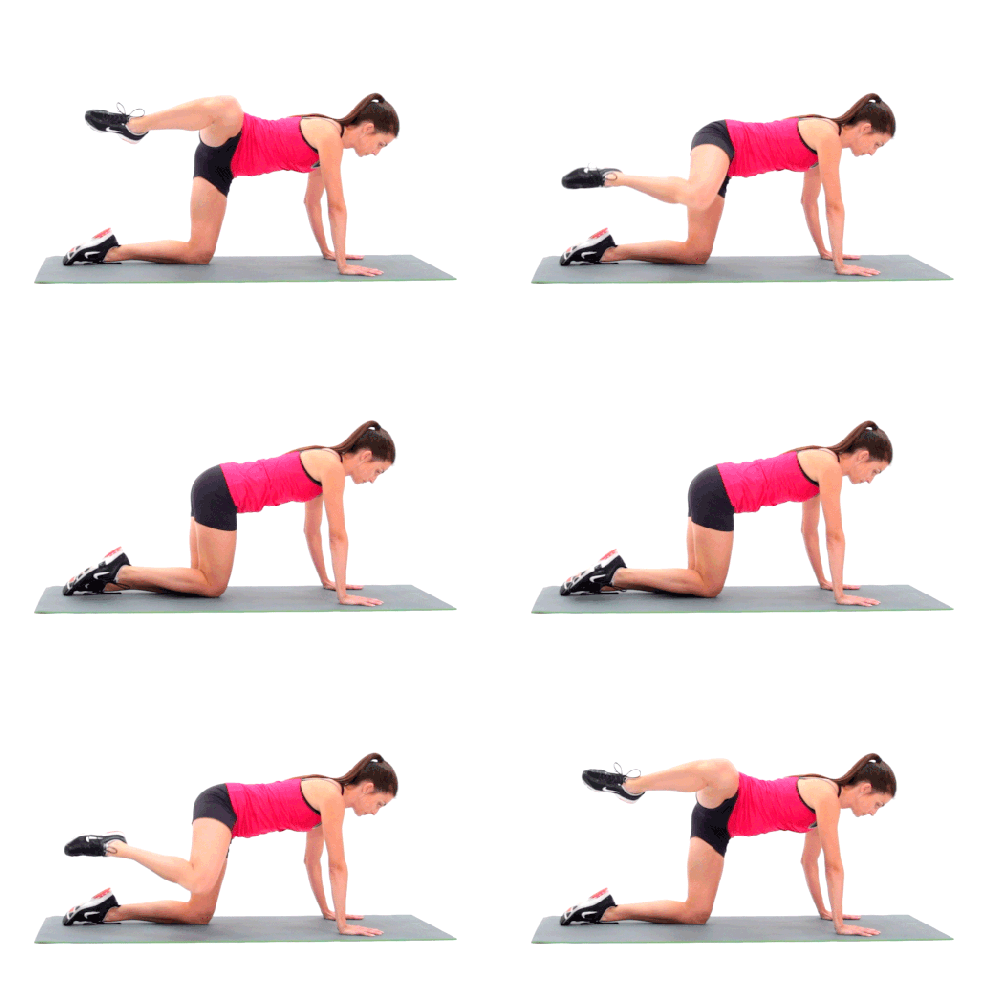
Back on all fours, raise your right leg out to the side with the knee bent, like a dog at a fire hydrant. Yes, that’s where the name comes from. When your thigh is parallel to the floor, kick the leg out and back in, then return to the start. Do 3 sets of 10 on each leg.
Sumo squat with heel raise
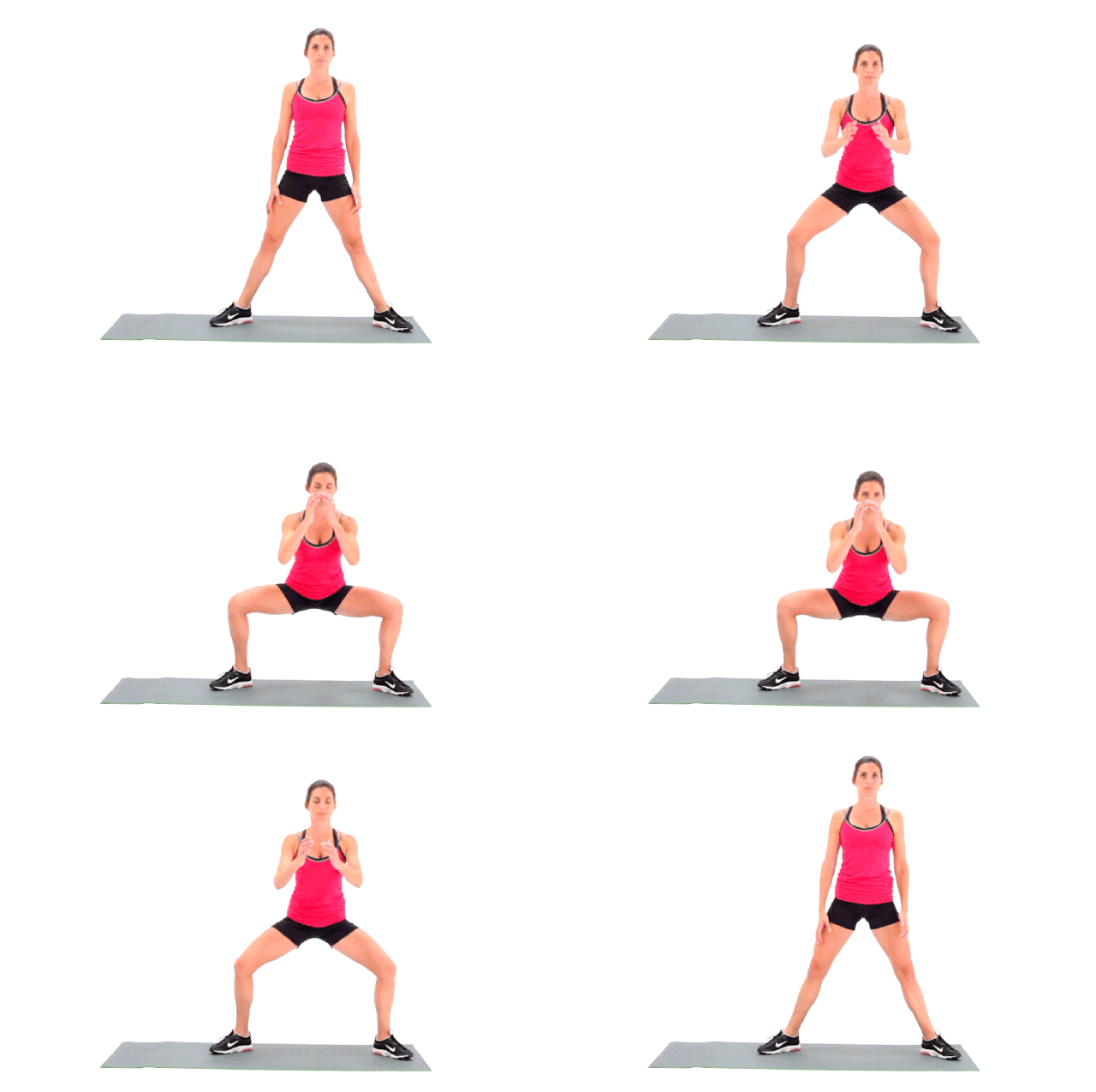
Stand with your feet wider than hip width and toes pointing slightly out. Bend your knees and push your hips down and back as low as you can. Hold that position and rise onto the toes of one foot, then release. Do the same with the other foot. Stay in the squat for both heel raises, then stand and repeat. Do 3 sets of 15.
How to fit these glute exercises into a week
These eight moves hit the top, bottom and sides of the glutes. Anyone who has carried groceries up a flight of stairs has put these muscles to work. The StatPearls anatomy chapters on the NIH’s NCBI Bookshelf describe the gluteus maximus as mainly extending the thigh and turning it outward, and the gluteus medius and minimus as moving the leg out to the side and steadying the pelvis when you stand on one leg. Because the CDC sets muscle-strengthening work at a minimum of 2 days a week, a sensible plan is to split the list across two sessions, four exercises each, with a rest day between. Most of us stick with a plan better when it feels short, and four moves is easier to finish than eight. Start with the sets and reps above. If you’ve ever copied a move from a video, you know the first try looks nothing like the clip, so give it a few sessions. Add weight or reps only when the last set feels smooth and controlled.
Glute exercises FAQ
How often should I do glute exercises?
The CDC recommends muscle-strengthening activity on at least 2 days a week for adults, alongside 150 minutes of moderate aerobic activity or 75 minutes of vigorous activity. The strength sessions should work all major muscle groups, so pair two glute sessions with upper-body and core work. Split the eight moves across both days and leave a rest day between them.
What are the three glute muscles?
The buttocks are made up of three muscles: the gluteus maximus, the gluteus medius and the gluteus minimus. StatPearls, on the NIH’s NCBI Bookshelf, says the maximus mainly extends the thigh and turns it outward, while the medius and minimus move the leg out to the side. The hip thrust and deadlift extend the hip; the lying leg lift and fire hydrant lift the leg sideways.
Do I need equipment for these glute exercises?
Only three moves need gear. The Bulgarian split squat needs a chair, the single leg deadlift needs a pair of dumbbells, and the hip thrust needs a bench and a barbell. The curtsy lunge, kick back and kick in, lying leg lift, fire hydrant and sumo squat need nothing but floor space.
This article is for general information only and is not medical advice. Talk to a licensed clinician about your own situation.

 Del Bailey


 Madeline Marshall