
 Del Bailey
A micro-habit, at its simplest and most useful definition, is a small, almost laughably modest action — often taking less than a minute, sometimes no more effort than a single conscious breath or a single extra glass of water — that, precisely because it asks so little of you in the moment, becomes one of the rare behaviors you can actually sustain for years rather than weeks, and it is in that quiet, unglamorous sustainability, rather than in any single dramatic transformation, that its real power tends to live. We tend to imagine health as something won through grand gestures, through the disciplined overhaul, the ambitious new gym membership purchased in a burst of January optimism, the elaborate meal-prep Sundays that look so satisfying in photographs and so exhausting by the third consecutive week, and there is nothing wrong with ambition of that kind, except that it so often collapses under its own weight precisely because it demands more willpower than any ordinary, tired, busy human being can be expected to supply on a Tuesday evening after a long day.
The seven micro-habits below ask for something gentler and, as it turns out, something far more durable: a handful of seconds here, a small redirection of attention there, repeated so consistently and so unremarkably that they eventually stop feeling like effort at all and start to feel simply like the way you live, which is, in the end, the only kind of health habit that actually survives contact with real life.
1. The First Glass of Water Before the First Cup of Coffee

There is something almost ceremonial about the way most of us reach immediately for caffeine upon waking, as though the body’s very first request of the day must be answered with stimulation rather than hydration, and yet after six or eight hours without a single sip of anything, the body wakes each morning in a mild, unnoticed state of dehydration that a cup of coffee, itself a diuretic, does very little to correct and may in fact quietly worsen.
Reversing that order — a full glass of water first, poured and drunk before the kettle or Keurig even begins its slow climb toward a boil — costs you perhaps ninety seconds and asks nothing of your willpower, since the glass can simply live on your nightstand or beside the coffee maker as a wordless, physical reminder, and over months this single reordering tends to compound into steadier energy through the mid-morning hours, when so many of us mistake simple thirst for the first stirrings of hunger or fatigue.
2. Ninety Seconds of Sunlight Before the Screen

Long before you unlock your phone and let its cold, blue-tinted light begin dictating the emotional texture of your morning, there is enormous and now well-documented value in simply stepping toward a window, or better yet a doorway, and letting actual daylight — even on a grey, overcast morning, even through the imperfect filter of clouds — land on your face and eyes for the length of time it takes to draw a few unhurried breaths. This brief, almost throwaway act of morning light exposure appears to help anchor the body’s circadian rhythm with a clarity and consistency that artificial light simply cannot replicate, and the downstream effects, cascading quietly through the day, tend to include easier, more natural sleepiness come evening and a mood that feels, for reasons not every practitioner can articulate but nearly all of them notice, subtly more settled and less brittle than it otherwise might have been.
3. Standing and Moving for the Length of a Single Song

Somewhere in the long, undifferentiated stretch of a seated workday, whether that day unfolds at a desk, in a car, or curled into a couch, there lives an almost invisible opportunity: the three or four minutes it takes for a single favorite song to play from beginning to end, during which you could simply stand, stretch, pace the length of a hallway, or climb a flight of stairs if one happens to be nearby, and in doing so interrupt what researchers increasingly describe as one of the more quietly corrosive patterns of modern life, prolonged uninterrupted sitting, which seems to matter almost independently of how much deliberate exercise a person otherwise gets. The beauty of tying this habit to a song rather than to a clock or an app notification is that music carries its own built-in momentum and its own natural, unforced ending, so the habit never feels like an interruption imposed from outside but rather like a small, pleasant pause you gave yourself.
4. A Single, Unhurried Breath Before Reacting

In the countless small frictions of an ordinary day — the sharp email, the interrupting colleague, the traffic that refuses to move, the child or partner whose request lands at precisely the wrong moment — there is a particular kind of power in pausing for one slow, complete breath, in through the nose and out through the mouth, before allowing yourself to respond at all, and though this sounds almost too simple to qualify as a health habit in any serious sense, the physiological reality is that this single breath meaningfully engages the parasympathetic nervous system, easing the body ever so slightly out of its reactive, adrenaline-tinted stance and into something calmer, and repeated across dozens of small frictions every single day, it appears to soften the cumulative wear that chronic, low-grade stress otherwise leaves on both the mind and, over years, the cardiovascular system itself.
5. Naming One Thing You’re Grateful for While Brushing Your Teeth
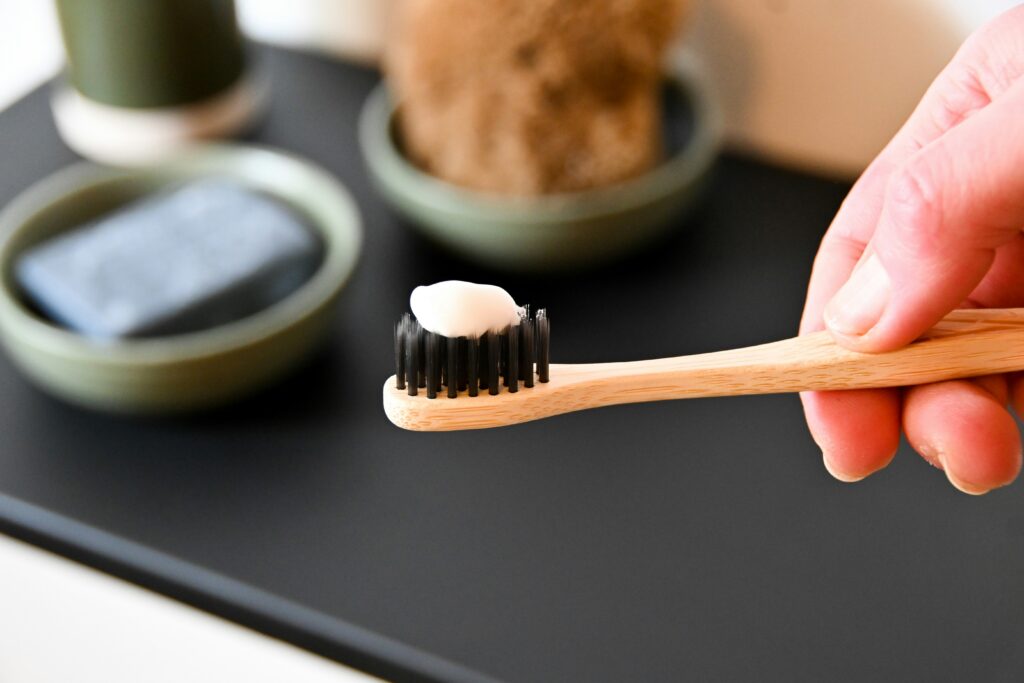
Because the two minutes spent brushing your teeth each morning and night already happen without fail, already occupy a fixed and unshakeable place in the architecture of the day, they make an unusually efficient and low-friction home for a habit that might otherwise never survive being added to an already-crowded to-do list, and simply allowing your mind, while your hands are occupied with something automatic, to land on one specific, concrete thing you feel grateful for — not a vague, general gratitude but something particular, the specific way morning light fell across the kitchen table, the particular kindness of a friend’s text — appears over time to gently retrain the mind’s habitual scanning patterns away from threat and toward appreciation, a shift that researchers studying gratitude practices have linked, with admittedly varying degrees of certainty, to improved mood and even better sleep quality.
6. A Single Vegetable or Piece of Fruit Added, Not Subtracted

Rather than approaching nutrition through the familiar and often demoralizing language of restriction, of all the foods you must now deny yourself, there is a gentler and, evidence increasingly suggests, more sustainable alternative in simply asking whether one additional vegetable or piece of fruit could be folded into a meal you were already planning to eat anyway, whether that means a handful of spinach wilted into an omelet that would have existed regardless, or an apple sliced alongside a sandwich, since this framing of addition rather than subtraction tends to sidestep the psychological reactance that diets so often provoke, and the cumulative nutritional benefit of even one extra serving daily, compounded across a year of ordinary meals, turns out to be considerably more meaningful than the modest effort it asks of you in any single moment.
7. Naming the Day’s One Priority Before Opening Your Inbox

Before the day’s first email arrives to hijack your attention with someone else’s priorities, before the notifications begin their steady, insistent drumbeat, there is real and underappreciated value in pausing for perhaps thirty seconds to write down, even just on a scrap of paper or a phone’s notes app, the single most important thing you would like to have accomplished by the time the day closes, since this small act of naming tends to function less as a rigid plan and more as a quiet anchor you can return to amid the inevitable pull of urgent-seeming but ultimately minor demands, and the resulting sense of intentionality, of having chosen your day’s shape rather than simply having it happen to you, appears to correlate with meaningfully lower reported stress by evening.
Why Small, in the End, Tends to Beat Big
What unites these seven habits, beyond their shared modesty, is the way each one is designed to attach itself to something you were already doing anyway — the coffee you were already going to make, the teeth you were already going to brush, the inbox you were already going to open — so that the habit never has to compete for a slot of dedicated time and willpower it is unlikely to win, and it is precisely this quality of attachment, of riding quietly alongside the existing architecture of your day rather than demanding a new one be built from scratch, that allows a person to still be doing these small things not just next week but next year, at which point their modest, individually forgettable effects will have long since folded into something that looks, from the outside, remarkably like the transformation everyone was chasing in the first place.

 Madeline Marshall